

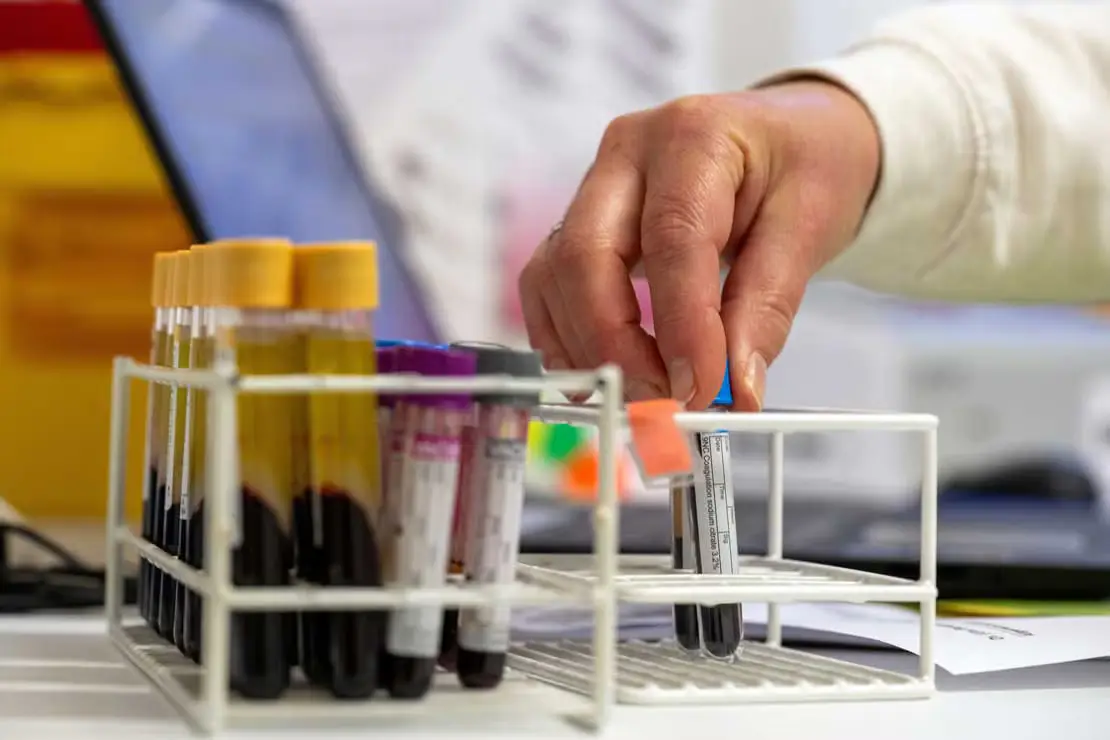
The University of Toronto, in collaboration with the Ontario Institute for Cancer Research (OICR) and Oxford Population Health, has published landmark findings in Cell Genomics demonstrating that blood samples collected up to nine years prior to a clinical cancer diagnosis contain detectable DNA methylation changes linked to early cancer development. The research charts a path toward minimally invasive liquid biopsy blood tests capable of identifying high-risk patients years before conventional symptoms appear.
The study was led by Nicholas Cheng, a recent PhD graduate in the Department of Molecular Genetics at the University of Toronto’s Temerty Faculty of Medicine, under the supervision of Professor Philip Awadalla of the Temerty Faculty of Medicine, Oxford Population Health, and the University of Oxford’s Big Data Institute. Co-authors include Daniel De Carvalho, Scott Bratman, and David Cescon, clinician-scientists and researchers at the Princess Margaret Cancer Centre, University Health Network (UHN), and the Temerty Faculty of Medicine.
Profiling Cell-Free DNA Methylation in the Ontario Health Study
While liquid biopsies are currently used primarily after a cancer diagnosis to analyze circulating tumour DNA or monitor disease recurrence, the University of Toronto research team examined whether systemic biological signals could be captured years before tumour detection. Researchers analyzed archived blood samples from 491 participants enrolled in the Ontario Health Study.
- Longitudinal Cohort Design: All 491 individuals were cancer-free at the time their blood samples were collected; a subset subsequently developed prostate or breast cancer months or years later, while control participants remained cancer-free.
- Cell-Free Methylated DNA Immunoprecipitation Sequencing: Using a highly sensitive blood-profiling platform, the team mapped chemical tags known as DNA methylation, which act as molecular switches regulating gene expression across cell growth, immune response, and inflammation pathways.
- Multi-Cancer Research Foundation: Funded by the Ontario Ministry of Colleges, Universities, Research Excellence and Security, the study builds on a broader research program including a 1,300-sample multi-cancer blood atlas demonstrating how methylation patterns classify localized and metastatic tumours.
Early Detection Signals in Prostate and Breast Cancer
Identifying Prostate Cancer Risk 5 to 8 Years Before Diagnosis
Prostate cancer generated the strongest pre-diagnostic signal through methylation alterations in DNA regions known as silencers, which normally keep specific genes turned off. By tracking these silencer methylation signatures, researchers accurately identified men at elevated risk of developing prostate cancer five to eight years ahead of clinical diagnosis. Because no population-wide screening program currently exists for prostate cancer, the authors note that such blood-based profiling could guide proactive surveillance for high-risk individuals while sparing low-risk men from unnecessary invasive biopsies.
Risk Stratification for Breast Cancer 1.5 to 8 Years in Advance
Although breast cancer signals proved more complex to capture in peripheral blood, researchers detected early methylation shifts within DNA enhancer regions. The assay differentiated women at higher versus lower risk of breast cancer between 1.5 and eight years prior to diagnosis, positioning the method as a promising complementary risk-assessment tool alongside standard mammography screening.
Program and Study Pathway Overview at the University of Toronto
Founded in 1827, the University of Toronto is Canada’s leading public research-intensive U15 university, educating students across its St. George, Mississauga, and Scarborough campuses. Through the Temerty Faculty of Medicine and the Department of Molecular Genetics, undergraduate and graduate students gain direct access to the Toronto Academic Health Science Network, including the Princess Margaret Cancer Centre, the Ontario Institute for Cancer Research, and Hospital for Sick Children. Academic pathways in Life Sciences, Molecular Genetics, Bioinformatics, and Biomedical Communications integrate laboratory research placements with translational clinical science. Prospective students and families exploring life sciences or graduate biomedical admissions at the University of Toronto can contact our education advisory team for personalized guidance.