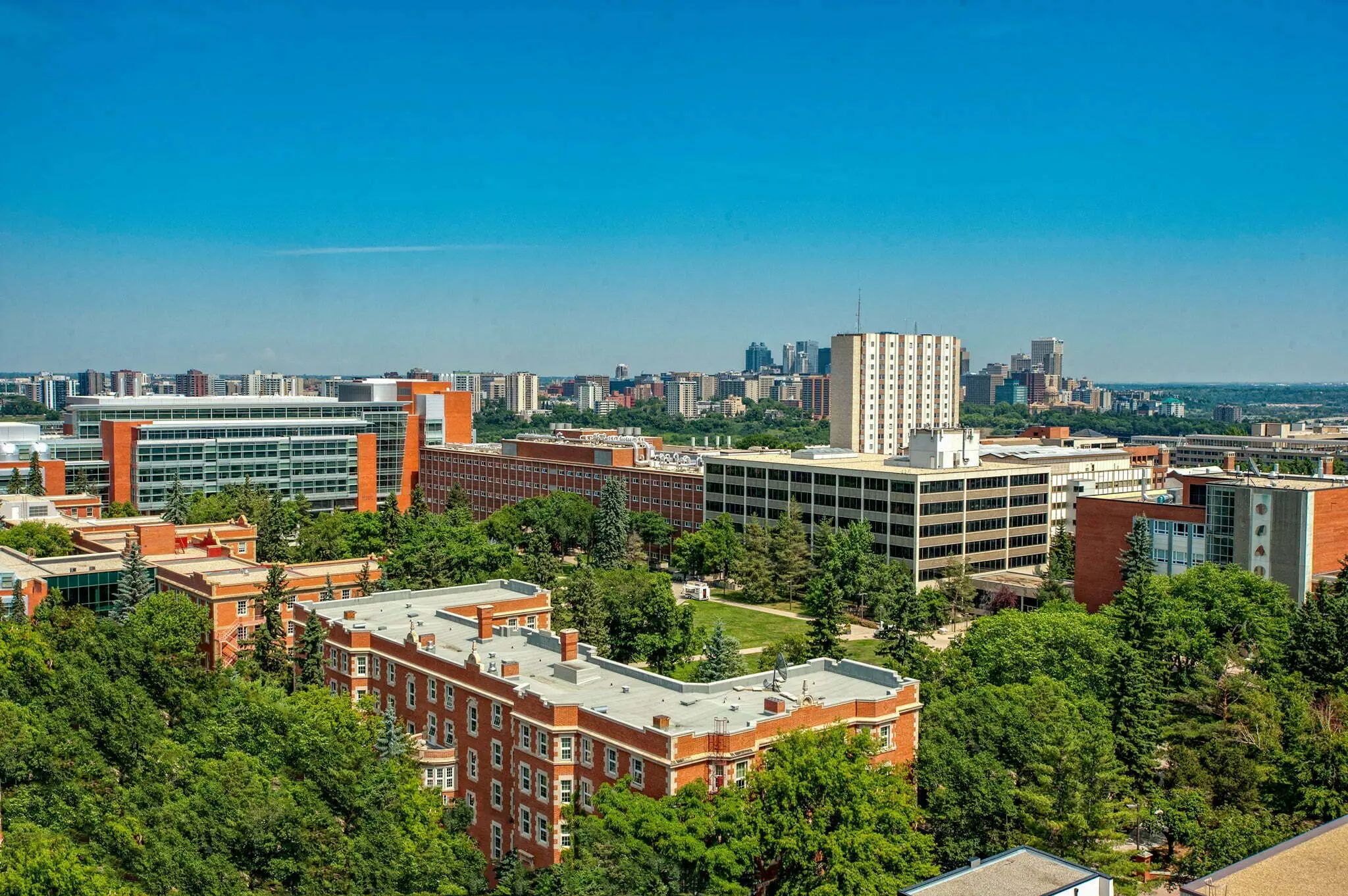
Campus Location and Community
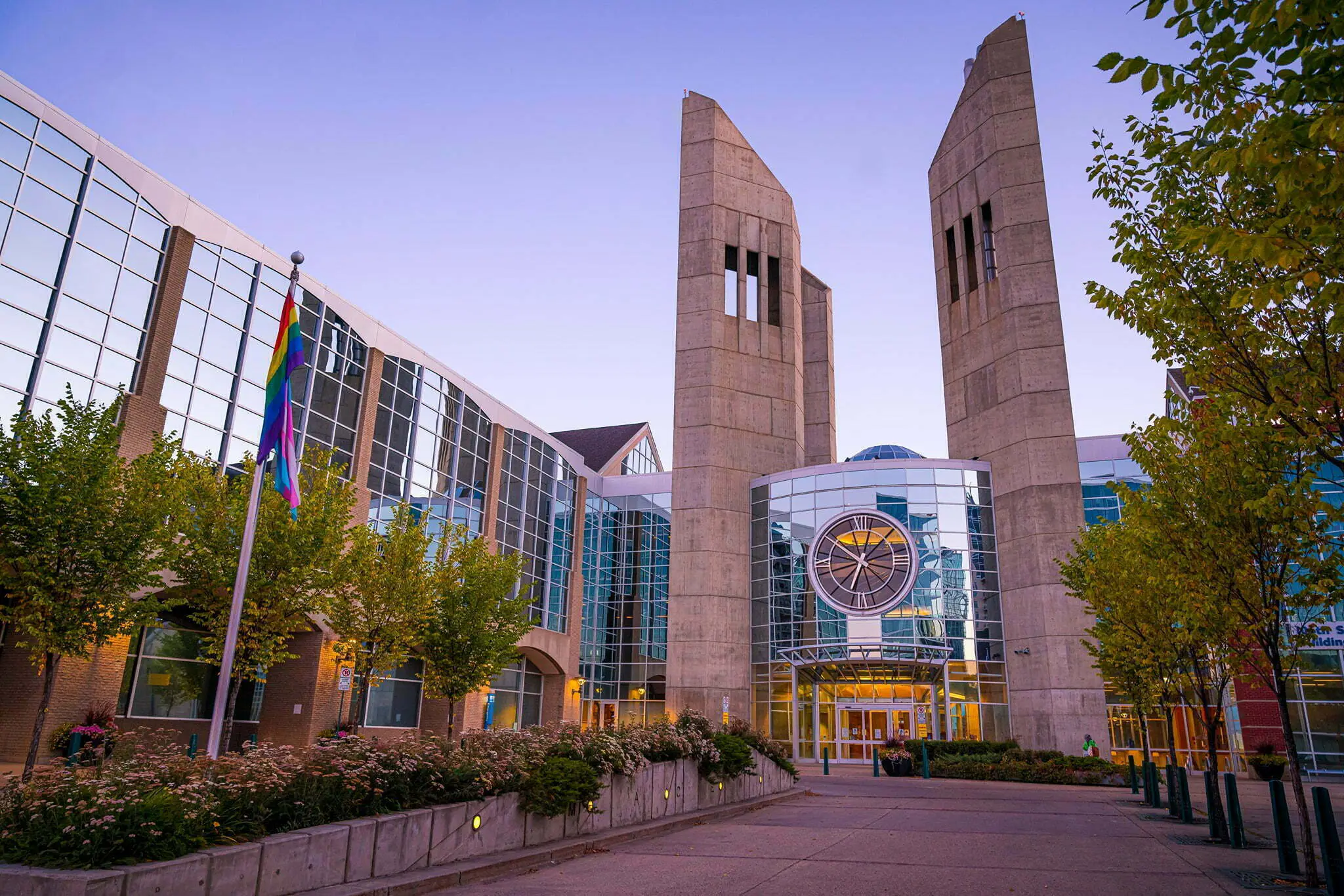
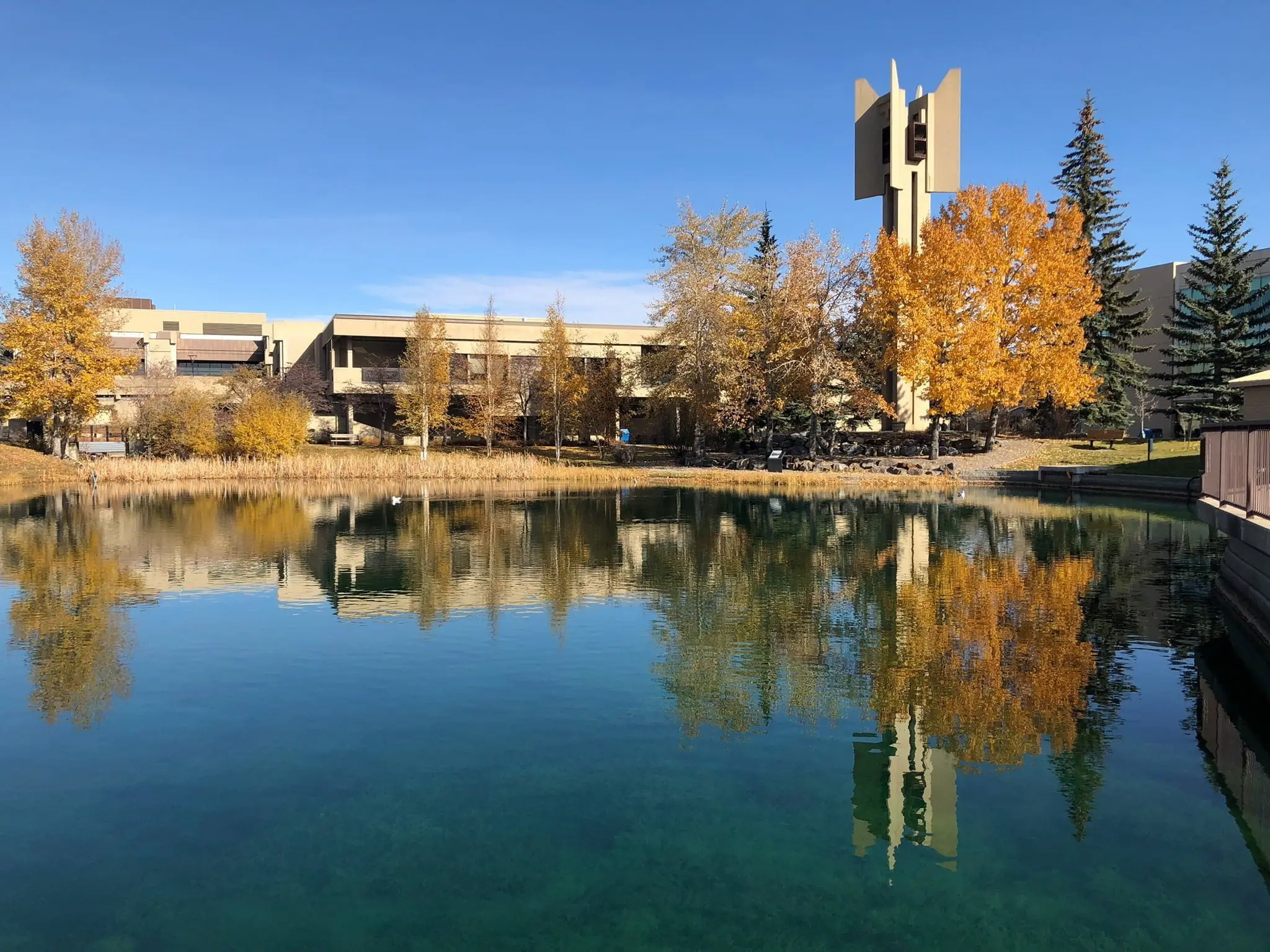
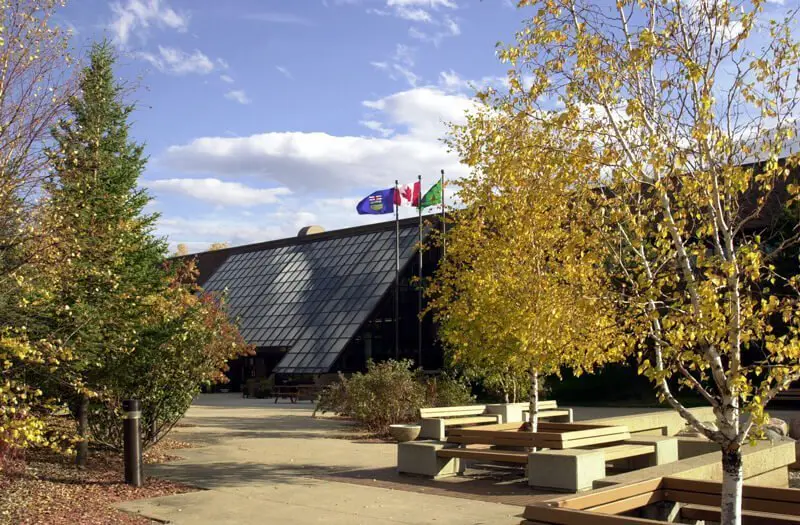
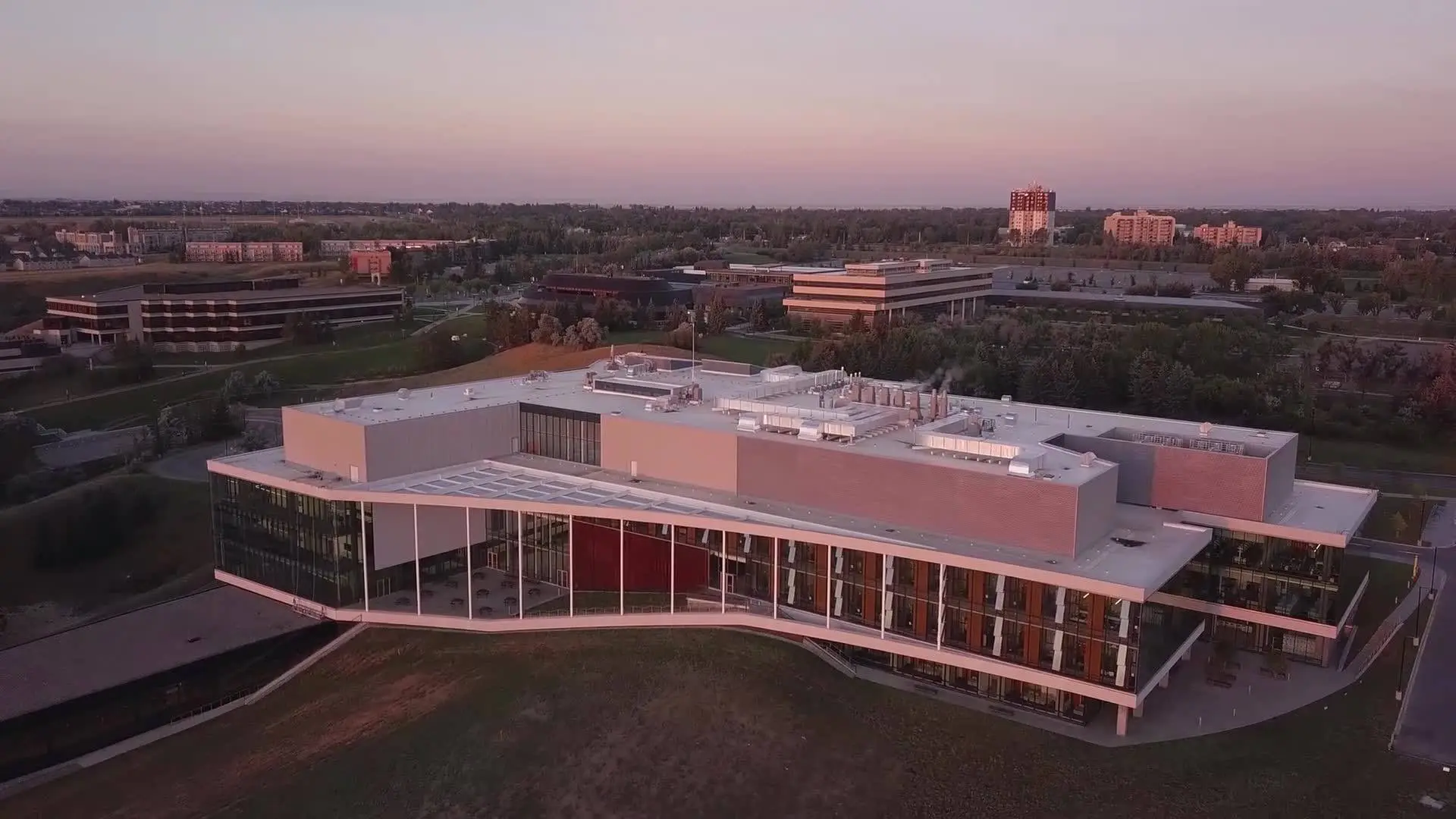
MacEwan’s downtown campus is in the municipal ward of O-day’min on Treaty 6 territory, a traditional gathering place for First Nations, Métis and Inuit peoples. Its location places students close to Edmonton businesses, cultural venues, restaurants, shops and public transit. Museums, galleries and theatres are within walking distance, as is Rogers Place.
Campus buildings are connected by indoor pedways that extend across six city blocks, allowing students to move between facilities without going outside. The North Saskatchewan River Valley provides nearby trails for walking, cycling and other outdoor activities.
Academic Areas and Credentials
MacEwan offers bachelor’s degrees alongside career-focused diplomas and certificates. Students in many degree programs can personalize their studies through majors and minors, including some minors offered outside their home faculty. Honours options are available in selected disciplines.
Some degrees offer a diploma exit, while certain diploma programs offer a certificate exit. Students with previous credentials may also be able to apply eligible coursework toward another credential. The availability of these pathways depends on the program and the assessment of prior learning.
Arts and Science
The Faculty of Arts and Science offers studies in the humanities, social sciences, natural sciences, mathematics and computing. Bachelor of Arts and Bachelor of Science students can pursue a focused area of study or combine disciplines through majors and minors. Selected areas also offer honours study.
Learning opportunities vary by discipline and may include research, field schools, internships, placements and laboratory work. The faculty’s programs are designed to develop skills in analysis, communication, problem-solving and working with evidence.
Business
The School of Business offers a Bachelor of Commerce and diplomas in business and related professional fields. Students can study areas such as accounting, management, marketing, human resources, international business and supply chain management. The school also covers fields such as legal support, library and information work, and travel and tourism.
Some business diplomas provide opportunities to transfer eligible credits toward a degree. The Bachelor of Commerce offers a co-operative education stream, while selected diploma programs include field placements or other applied learning.
Fine Arts and Communications
The Faculty of Fine Arts and Communications brings together communication studies, design, music, theatre, studio arts and arts management. Its degrees and diplomas combine creative or professional practice with theoretical study. Depending on the field, students may participate in public performances, exhibitions, field placements, community projects or recording experiences.
Allard Hall provides spaces for creative learning, including theatre facilities and recording studios. Some fine arts and music degrees allow students to exit with a diploma after completing the applicable portion of the program.
Health, Community Studies and Nursing
The Faculty of Health and Community Studies offers programs in health services, human services, education support, social work and community justice. Study options include degrees, diplomas, certificates and a physical education transfer pathway. Practical experiences may include field placements, teaching clinics or directed field studies.
The Faculty of Nursing offers nursing and psychiatric nursing pathways that combine classroom learning with laboratory, simulation and clinical experience. Psychiatric nursing includes a diploma exit and a post-diploma degree option. The Bridge to Canadian Nursing certificate supports eligible internationally educated nurses and nurses seeking to review or update their knowledge.
Continuing Education and Preparation
The School of Continuing Education offers academic upgrading, English as an Additional Language, professional development, health education, post-diploma studies and micro-credentials. Its offerings include short courses and credentials that can supplement existing education or support career development.
The pimâcihisowin Foundation Program supports Indigenous students through preparatory and upgrading courses that incorporate Indigenous worldviews and healing practices. Depending on the program, study options across the university include on-campus, online, blended, full-time and part-time learning.
Experiential Learning and Research
Many MacEwan programs incorporate work-integrated learning, connecting academic study with activities related to a student’s field. Opportunities vary by program and can include co-op, internships, field placements, practicums and clinical experiences. Some placements are required for graduation, and some offer paid opportunities.
Community-engaged learning and research allow students to work with local groups on issues identified by those organizations. MacEwan also partners with institutions abroad, giving eligible students the opportunity to spend one or two semesters studying in another country while working toward their degree.
Students may participate in faculty research or pursue projects of their own. The Undergraduate Student Research Initiative offers research grants and support for applications to external awards. Student Research Day provides an opportunity to present work through oral or poster presentations, and students can publish findings in the MacEwan University Student eJournal.
Learning Facilities
MacEwan’s facilities support practical learning across its academic areas. The Clinical Simulation Centre uses computerized mannequins and patient actors to create scenarios in which students can practise clinical skills. Other specialized spaces include a zebrafish research lab, a television studio, recording studios and teaching clinics.
The campus Makerspace gives students access to tools and technology for activities such as 3D printing, coding and textiles. Arts and science courses may also include laboratory components, while students in theatre and music can develop their skills through productions and performances.
Admission Pathways and Transfer Credit
Admission requirements vary by program. MacEwan considers applicants through regular, mature and previous post-secondary admission categories. Many programs require high school English and additional approved subjects; mathematics, biology, chemistry or social studies may be required for particular fields. The university recognizes equivalent courses from other Canadian provinces and territories.
Some programs are competitive and assess applicants using academic results, non-academic criteria or both. Depending on the program, additional requirements may include an audition, portfolio, statement of intent, essay, police information check or vulnerable sector search. Some health programs also require spoken-language proficiency or other program-specific documentation.
All applicants must meet the university’s English language proficiency requirements. MacEwan offers English as an Additional Language and preparatory study for students developing their language or academic skills. These options have their own admission requirements and do not replace the need to meet the requirements of a chosen program.
Previous post-secondary coursework, eligible International Baccalaureate and Advanced Placement courses, and articulated dual-credit courses may be considered for transfer credit. Some programs, including selected degree-completion and professional pathways, require previous post-secondary education or an eligible credential for admission.
Student Support and Campus Life
Academic advising is available through a central advising centre and individual faculties and schools. Students can also access writing feedback, first-year peer connections, career advice, webinars and a job board. Access and Disability Resources works with students who have disabilities or medical conditions to arrange supports and accommodations, including classroom and exam services.
Well-being services include individual and group counselling, peer support and access to medical services at the MacEwan University Health Centre next to campus. The university also provides support and education related to sexual violence, human rights, discrimination, and sexual and gender diversity.
The kihêw waciston Indigenous Centre offers personal, academic, financial and cultural support for Indigenous students. MacEwan International supports international students with their academic goals and helps provide global learning opportunities for the university community.
The student-run Students’ Association of MacEwan University provides services and activities that include student groups, academic advocacy, peer support, a food bank and events. The university’s Sport and Wellness facilities include an indoor pool, fitness centre and exercise studios. Students can take part in recreational leagues, clubs and fitness activities, while the MacEwan Griffins compete in university basketball, hockey, soccer and volleyball.
Residence and Financial Support
MacEwan Residence is located on campus, close to classes and downtown amenities. Furnished bachelor, two-bedroom and four-bedroom suites are available, with utilities and high-speed Wi-Fi included. Residence offers a front desk, security support and shared spaces for activities such as movie and game nights. Incoming first-year, full-time students qualify for priority housing.
Scholarships, bursaries and awards are available to eligible incoming and current students. Scholarships generally recognize academic achievement, bursaries are based on financial need, and awards may consider factors such as leadership or volunteer experience. Individual eligibility requirements vary.