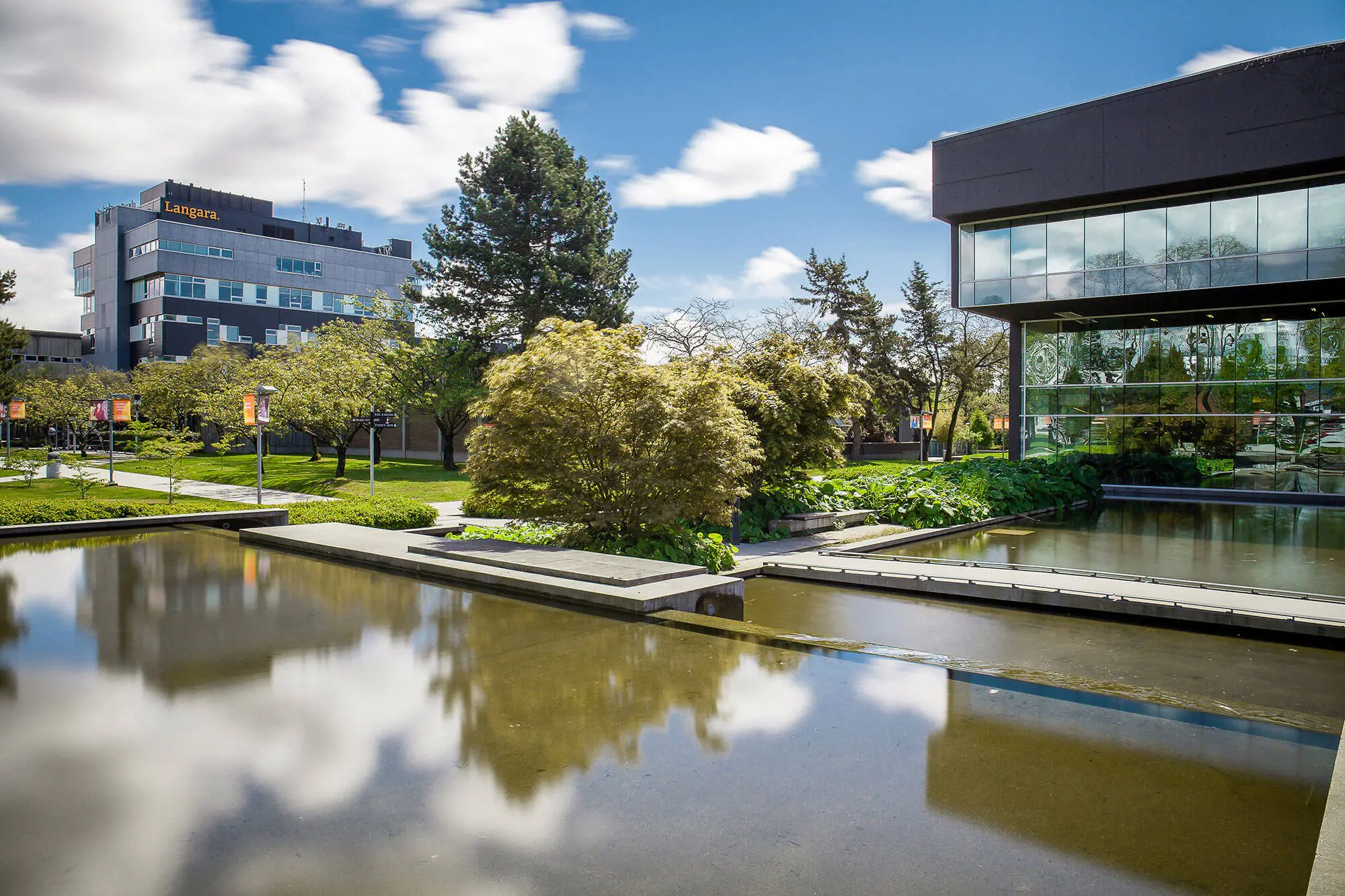
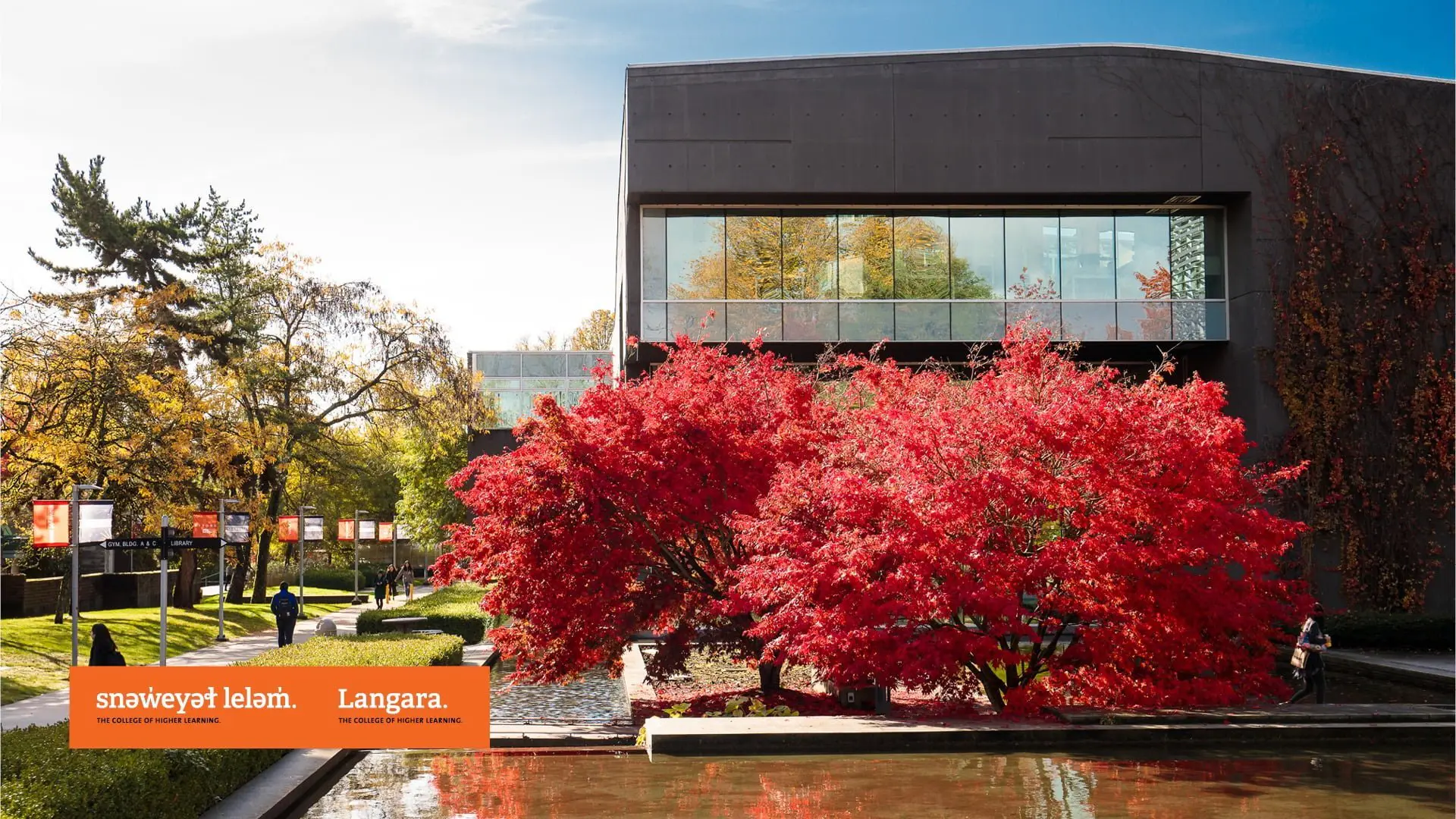
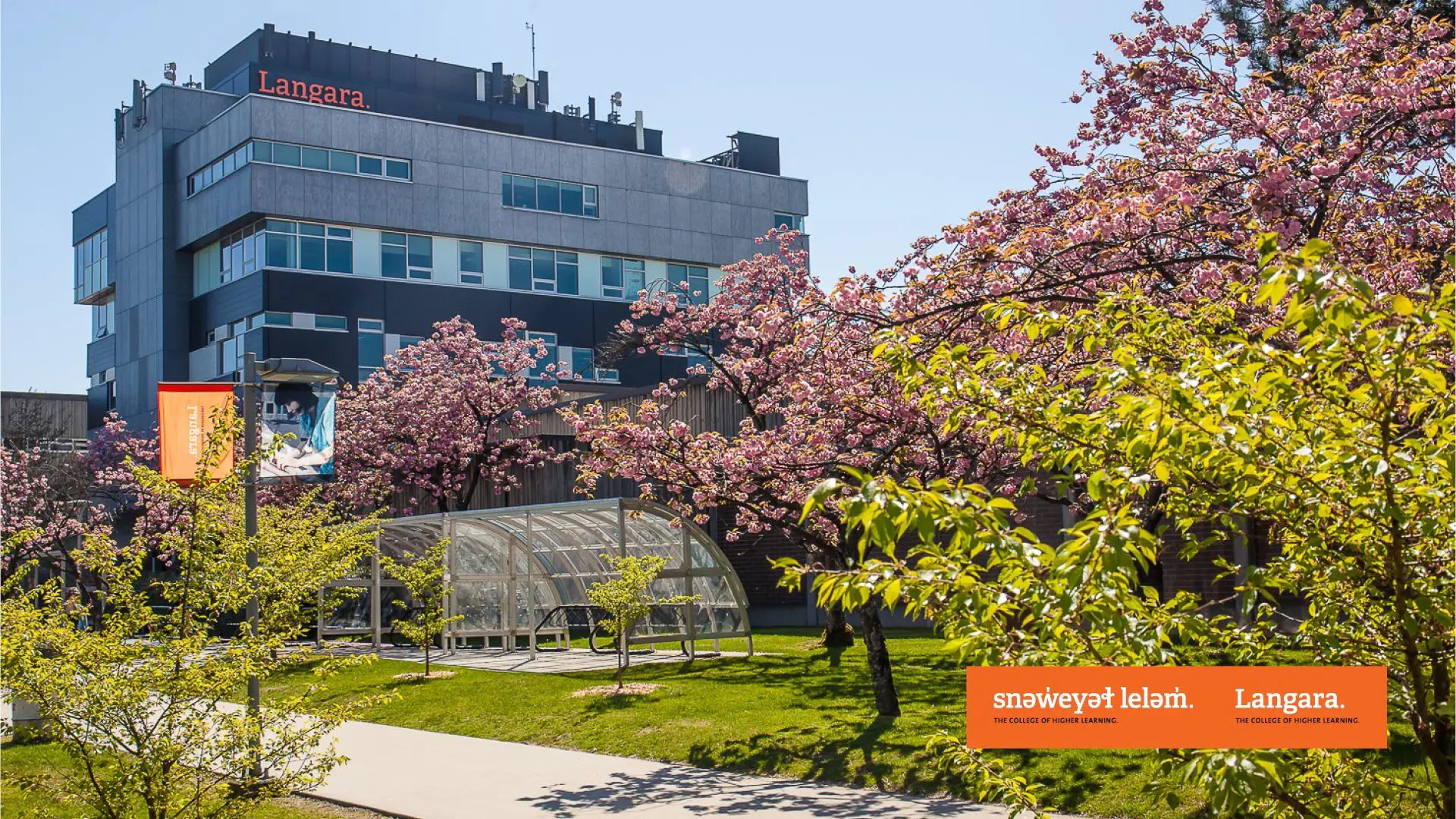
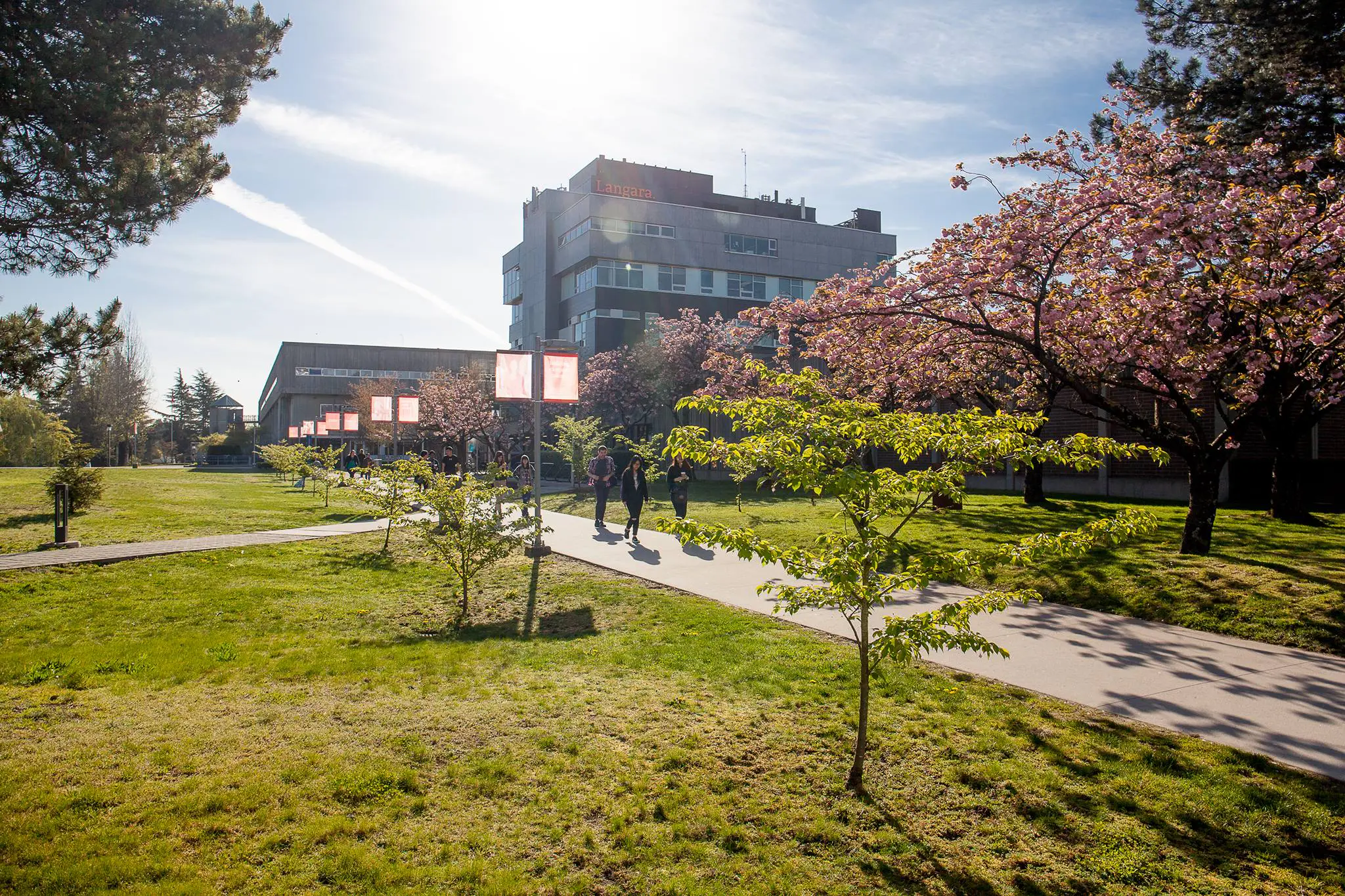
Campus location and community
Langara’s campus is situated on the traditional, ancestral and unceded territory of the Musqueam people. The Musqueam have given the college an Indigenous name meaning “house of teachings.”
The main campus is a short walk from Langara–49th Avenue SkyTrain station and close to bus routes. Students can also cycle to campus using bike routes or register for carpooling to use designated parking spaces.
Programs and education
Langara offers programs and specialized courses that prepare students for university transfer or help them build a foundation for a career. The college lists more than 1,700 courses and over 130 programs, ranging in length from about four months to four years. Options include open-enrolment programs, limited-enrolment programs, university transfer and academic English for international students.
The college awards certificates, diplomas, associate degrees, bachelor’s degrees and post-degree diplomas. Small classes give students opportunities to focus, interact with instructors and learn from their professional experience. Depending on the program, students may choose to study full-time or part-time.
- University transfer: Students can earn credits at Langara and then apply to transfer to a university in Canada, or continue into a suitable bachelor’s degree program at Langara. The college offers a range of transfer options in British Columbia.
- Bachelor’s degrees: Fields include business administration, recreation management, bioinformatics and nursing, preparing students for a variety of career paths.
- Career education: Coursework is built around practical skills and employer needs, with instruction from people who have industry experience.
- Post-degree programs: Post-degree diplomas and certificates help university graduates expand their knowledge and professional skills in a specific field.
- Langara English for Academic Purposes (LEAP): This intensive academic English program helps international students develop communication skills and prepare for post-secondary study in Canada.
University transfer and continuing studies courses
Transfer is an important part of Langara’s educational system. Some eligible programs allow students to transfer up to 60 credits, although exceptions apply and credit recognition depends on the program and receiving institution. Associate degrees and diplomas can also provide a starting point for those planning further study.
Alongside regular programs, continuing studies courses offer options for upgrading career skills, preparing for a career change or pursuing personal interests. Continuing studies courses are not transferable for university credit.
Arts
Langara teaches a wide range of arts programs, including Arts (General), Arts & Science (General), English, Film Arts, Fine Arts, Creative Writing, Design Formation, Art History and Access Langara. Other fields of study include journalism, photography, theatre, animation and digital design. Students can explore full-time or part-time options appropriate to their program.
Arts programs offer opportunities to gain practical experience. Film Arts is an intensive, collaborative program for people who want to work in the film industry. Design Formation develops skills related to display, graphic design, interior design and exhibition design.
In digital and media arts, students can explore web and mobile app design, 2D Animation & Digital Art, 3D Animation for Game, Film & Visual Effects, Digital Music Production, Graphic Novel & Comix or professional photography. Depending on the program, further study and post-degree options help learners continue developing professional skills in design and content creation.
Business and commerce
Commerce programs lead to credentials such as a Diploma, Post-Degree Diploma or Certificate. Students can develop knowledge of marketing, sales, advertising, distribution, e-commerce and market research. Many programs take about one to two years, depending on the credential, and may offer internship opportunities during study. Eligible credits may also be considered for transfer to universities in British Columbia or elsewhere in Canada.
Other business fields include accounting, business administration, financial management, supply chain and logistics. The college also offers options related to nutrition management, combining management knowledge, nutrition science and food service operations, as well as real estate for students interested in that industry.
Health care
Food & Nutrition provides knowledge of food, nutrition and health, from production and processing to consumption and their effects on individual and community health. The Food, Nutrition, & Health Transfer program builds a foundation for students planning to transfer into Land and Food Systems at the University of British Columbia (UBC). Foundations in Health Studies includes courses that can help students prepare for Langara’s bachelor’s degree in nursing.
Kinesiology helps students learn about movement and physical activity. Applicable credits may be considered for transfer into related university programs in British Columbia. Health Sciences introduces learners to issues involving health, illness and communities, preparing them for further study in related fields.
Leisure Studies teaches students about recreation, fitness and sport. With an appropriate choice of courses, students can apply to transfer to related university programs. Other health fields listed by the college include nursing, massage therapy and health care administration.
Social sciences and humanities
Humanities and social sciences help students explore and analyze social, cultural, political and economic issues. Fields also include history, geography, philosophy, psychology, political science, education and social services. Selected options include:
- Aboriginal Studies: Examines the cultures, histories and lives of Indigenous peoples in Canada and around the world, alongside issues of politics, economics and self-government.
- Asian Studies: Studies the cultures and histories of Asia-Pacific societies, including religion, economics and politics in the region.
- Canadian Studies: Explores Canadian history, society, politics and culture; this knowledge may be useful in work involving government, business or non-governmental organizations.
- Classical Studies: Explores the history, culture, philosophy and languages of ancient Greece and Rome.
- Early Childhood Education: Prepares students to work with young children and families in licensed child care settings.
- Criminology: Teaches scientific research methods and theoretical approaches to understanding crime, related social issues and society’s responses.
- Environmental Studies: Explores globalization, ecosystems and human impacts on the environment through subjects such as biology, chemistry, English and geography.
- Family Studies: Examines families through sociological, psychological, philosophical, literary and historical perspectives in Canada and around the world.
- Education Assistant: Develops the knowledge and skills needed to support children and youth in classroom settings.
Science and technology
Langara teaches programs such as Applied Science for Engineering, Bioinformatics, Biology, Chemistry, Computer Science, Ecology, Full Stack Web Development, Internet & Web Technology, Library & Information Technology, Mathematics, Physics and Engineering Transfer. Fields also include data analytics.
Applied Science for Engineering provides academic and practical knowledge to prepare students to transfer into a university engineering program. Bioinformatics focuses on applying computer science to biological research, particularly genetics, genomics and molecular biology. Students study both fields and can explore a pathway to a bachelor’s degree in Bioinformatics.
Biology provides a foundation in the study of living organisms, from anatomy, botany and ecology to genetics, microbiology and zoology. Ecology focuses on ecosystems and interactions between organisms and their environments. Chemistry is the study of matter, including organic, inorganic, analytical and physical chemistry.
Computer Science combines an academic foundation with practical experience. Students can apply to transfer applicable credits into computer science programs at institutions such as Simon Fraser University (SFU), UBC and the University of Victoria (UVic); the year of study into which they are admitted depends on their credits and the receiving institution’s requirements. Full Stack Web Development develops web development skills using programming methods, tools, frameworks and middleware. Internet & Web Technology covers computer science, web development and programming, animation, operating systems and databases.
Library & Information Technology prepares students to work in information centres and specialized libraries in health care, law, business or government. Coursework includes information science, records management, technology and information access. Students learn how to organize storage systems, manage information and respond to users’ needs; after graduation, they can seek work in agencies, businesses, hospitals or specialized libraries.
Mathematics covers algebra, linear algebra, calculus, differential equations, statistics and computer science. Learners develop their ability to apply knowledge in economics, science, engineering, health care and research. Physics focuses on topics such as electricity, magnetism, heat and classical mechanics, while encouraging students to apply theory to solve problems in technology, health care and science.
Facilities and student life
Buildings A, B and C have small classrooms that give students opportunities to interact with instructors and classmates. The college also has laboratories, computer labs, geography and archaeology rooms, and creative spaces.
Building L houses the library, spaces for group study and review, and multipurpose classrooms. The Science and Technology Building, also known as T Building, was designed with water-saving, energy-efficient and environmentally friendly features.
The campus has a variety of green spaces, including a garden where plants, vegetables and fruit are grown, and an area where bees produce honey. Outside class, students can take part in clubs, volunteering, indoor sports and events such as BBQs, film screenings and other community programs.
Students interested in sports can try out for soccer or basketball teams. Intramural and recreational activities also include basketball, soccer, badminton and open recreation sessions. VOLT volunteers support events, answer questions and contribute to communities on and off campus.
Academic, health and financial support
Academic advisors help students organize their personal, academic and career goals and provide guidance on using college resources. Students can access support with essay writing, study skills, mathematics and statistics, as well as tutoring and the Langara Student Success course to prepare for academic life.
The college offers academic accommodations, learning technology and information about funding for adaptive technology or support services. Counselling Services supports personal, academic and career needs; Health Services provides basic medical care. The Gathering Space offers academic, counselling and cultural support for Indigenous students.
International students can find information and support related to their studies, living in Vancouver, career advising and extracurricular activities. Those who qualify can also explore scholarships, bursaries, awards, loans and work-study programs. Some entrance bursaries are available to eligible high school students to help with first-semester costs.
Career opportunities and practical learning
Some programs incorporate practical learning, helping students gain experience in their field of study. Opportunities vary by program and may be paid or unpaid. Co-op education combines full-time academic terms with paid work terms; other options may include professional internships, placements with host organizations and experiential work terms.
The Co-op and Career Development Centre supports career planning through workshops, interview guidance, resumé feedback, online job information and employer networking events. Along with hands-on learning, these activities help students develop skills and build professional relationships.
Depending on their program, students can also explore international experiences such as Disney Field School, exchanges, study abroad or collaborative intercultural online learning. Volunteer activities such as VOLT and the C CHANGE event offer further opportunities to gain experience and contribute to the local community.
Some fields of study, such as information technology, child care and nursing, are connected to workforce needs in British Columbia. However, employment and immigration opportunities depend on individual qualifications, market conditions and current regulations. International students should separately check their program’s Post-Graduation Work Permit (PGWP) eligibility and applicable immigration requirements; graduation does not automatically guarantee employment or permanent residency.
Applied research and global learning
Langara’s Centre for Applied Research connects participants and partners with a range of expertise and ways of knowing. Students can take part in selected off-campus projects in areas such as natural product innovation, data analytics, bioinformatics, and community- or Indigenous-led initiatives.
Field courses, international work opportunities and exchange programs help connect learning with settings outside Canada. Specific opportunities depend on the program and participation requirements.
Admission requirements
Programs may offer full-time, part-time or online study, depending on the program. Common start dates are in September, January and May; students should check the course schedule for their intended program.
General post-secondary admission normally requires applicants to have graduated from high school or be at least 19 years old. International students should check the college’s website for equivalent credentials and meet applicable study permit, visa or entry document requirements. Post-degree programs generally require applicants to have a bachelor’s degree.
Meeting general admission requirements does not replace program-specific requirements. Open-enrolment programs are available to those who meet the general requirements and allow students to explore fields of study; limited-enrolment programs have a restricted number of places, may be competitive and often have additional admission requirements.
All applicants must demonstrate English proficiency according to the applicable requirements. Depending on the program, accepted forms of proof may include an eligible English course, previous education, the Langara English Test (LET), IELTS Academic, TOEFL iBT or Duolingo. Students who complete LEAP 8 may use that result as a pathway to admission to regular programs, while still meeting other requirements.
Some programs require previous courses or credentials, relevant experience, a portfolio, resumé, references, a statement of intent, an interview or an aptitude test. Additional requirements may include first aid certification, a criminal record check or completed post-secondary courses.
Depending on the program and course, students may need to achieve a specified result on tests such as the LET, Language Proficiency Index (LPI) or Mathematics / Statistics Diagnostic Test (MDT). Specialized fields such as library studies, multimedia and painting may publish their own requirements on department websites. Applicants should check current information before applying.
Prospective students can attend a program information session, a guided campus tour or an advising appointment to learn about prerequisite courses and the application process. The Admissions Office and Financial Aid Office are contacts for further information about admission requirements and financial support.