

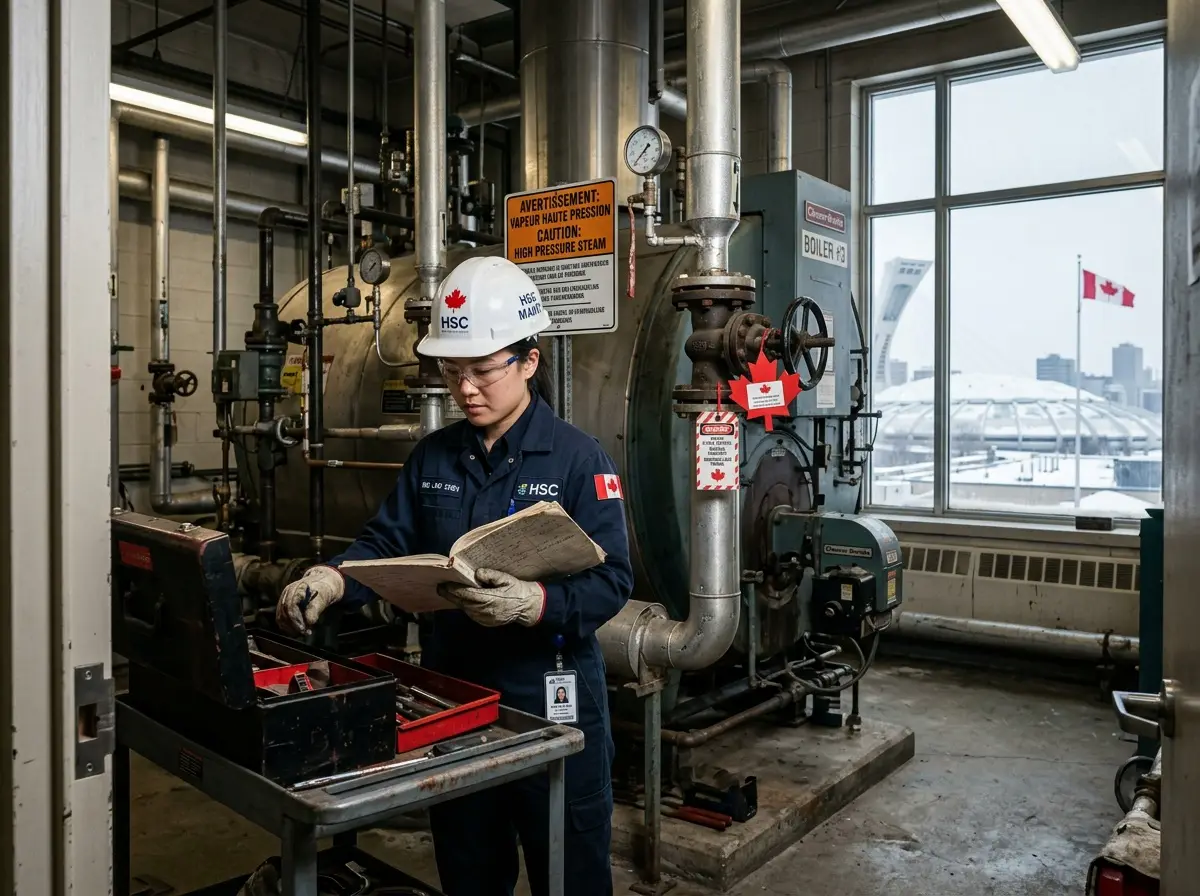
- This group performs some or all of the following duties:
- Read blueprints or specifications to plan sequence of operation
- Lay out plate, sheet steel or other heavy metal and mark bending and cutting lines on work piece using protractors, compasses and drawing instruments or templates
- Set up and operate heavy-metal working machines such as brakes, rolls, shears, flame cutters and drill presses to cut, shape and form metal into parts or sections
- Fit and weld metal parts or sections together to fabricate boilers, vessels, tanks, heat exchangers, piping and other heavy-metal products
- Erect and install boilers and other heavy-metal products according to specifications using hand and power tools
- Repair and perform maintenance work on boilers and other heavy-metal products
- Direct activities of hoist or crane operators and other workers during fabrication, assembly, installation or repair of structures
- Test finished structures using a variety of methods.
- Boilermakers may specialize in rigging and hoisting, preparation and layout, or welding aspects of the trade.
Employment Requirements
- Completion of secondary school is usually required.
- Completion of a three- to four-year apprenticeship program or a combination of over four years of work experience in the trade and some high school, college or industry courses in boilermaking is usually required to be eligible for trade certification.
- Trade certification is compulsory in Nova Scotia, Quebec and Alberta and available, but voluntary, in all other provinces.
- Red Seal endorsement is also available, in all provinces, to qualified boilermakers upon successful completion of the interprovincial Red Seal examination.