

- This group performs some or all of the following duties:
- Dietary technicians
- Assist dietitians or nutritionists to plan and supervise food service operations
- Plan menus and diet for individuals or groups under the direction of a dietitian or nutritionist
- Assist in the supervision of personnel who prepare and serve food
- Help patients select menu items
- Assist dietitians with research in food, nutrition and food service systems.
- Ocularists
- Design, fabricate and fit ocular prostheses and conformers, and may design and fabricate implants
- Paint the iris and pupil of artificial eyes
- Clean and restore ocular prostheses
- Advise patients concerning the loss of depth perception and the care and use of ocular prostheses
- Repair and maintain fabrication and laboratory equipment
- Consult with ophthalmologists concerning insertion of ocular prostheses.
- Prosthetists and orthotists
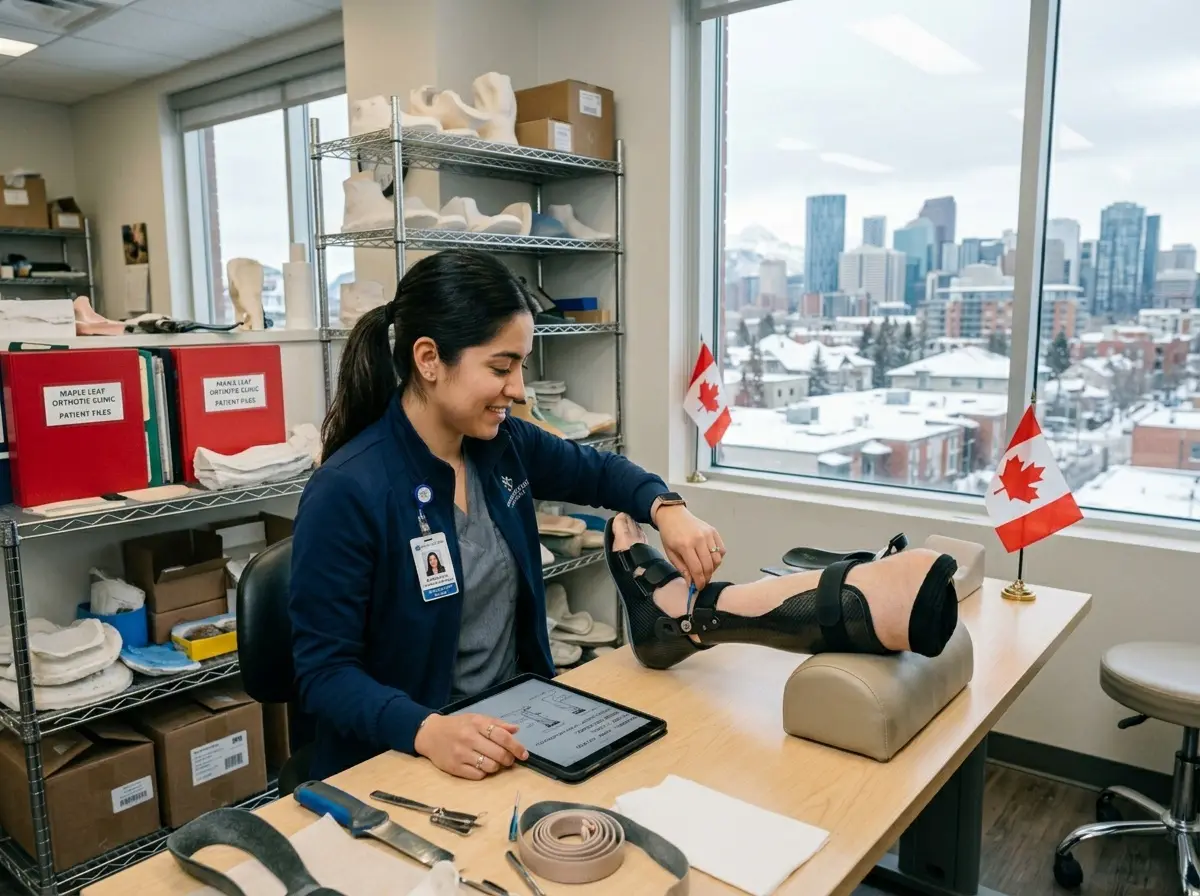
- Design, fabricate and fit prosthetic and orthotic appliances such as artificial limbs, braces or supports
- Interpret physicians' specifications and examine and measure patients to develop working sketches of appliances
- Make and modify plaster casts of areas to receive prostheses or orthoses
- Fit, adjust and repair appliances
- Advise patients in the use and care of prostheses and orthoses
- Supervise and direct the activities of prosthetic and orthotic technicians.
- Prosthetic and orthotic technicians
- Assemble or build prosthetic and orthotic appliances according to drawings, measurements and plaster casts using a variety of materials such as metals, plastics and leathers
- Repair, rebuild and modify prosthetic and orthotic appliances or orthopaedic footwear
- May take the body or limb measurements of patients.
Employment Requirements
- Dietary technicians require completion of a two- to three-year college program in dietary technology and supervised practical training.
- Ocularists require completion of the education program of the American Society of Ocularists and supervised practical training or a five-year supervised practical training program under a certified ocularist.
- Certification by the National Examining Board of Ocularists is usually required.
- Prosthetists and orthotists require a two-year college program in prosthetics and orthotics technology and three years of supervised practical training.
- Certification by the Canadian Board of Certification of Prosthetists and Orthotists (CBCPO) may be required.
- Prosthetic and orthotic technicians usually require a two- to three- year college program in prosthetics and orthotics and one to two years of supervised practical training or completion of secondary school and up to four years of supervised practical training under a certified prosthetist or orthotist.
- Registration with the Canadian Association of Prosthetists and Orthotists (CAPO) may be required.
Additional Information
3219 continues as 32129 and part transferred to 33103 and part split off to emerging item 32124