Campuses and Niagara Region
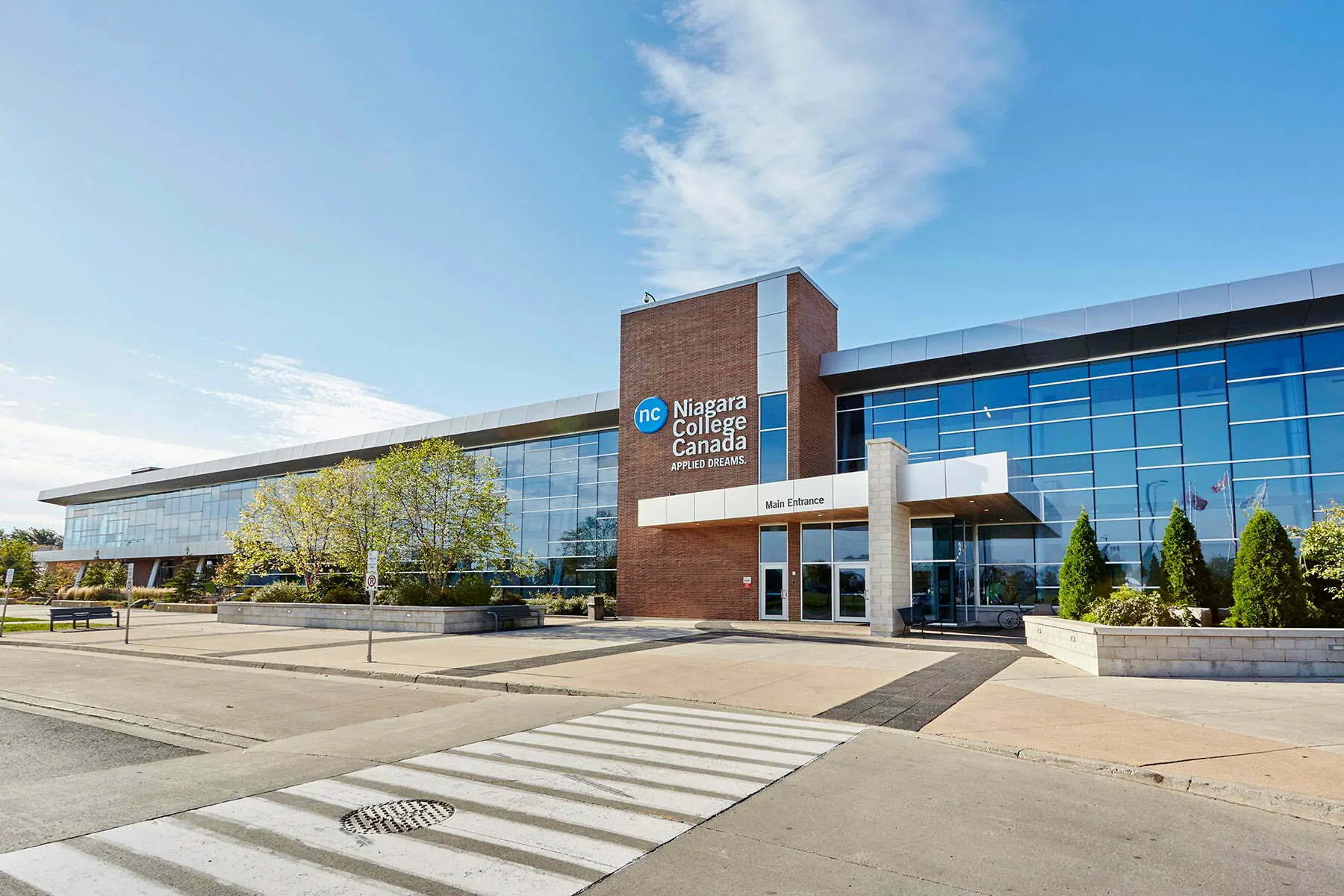
The Welland Campus is in a residential area near shops and food outlets. It is home to studies in health, community services, justice, fitness, media, technology and skilled trades, as well as academic and English language programs. Its facilities include the Applied Health Institute, the Rankin Technology Centre, a library and learning commons, an athletic centre and spaces for applied research and innovation.
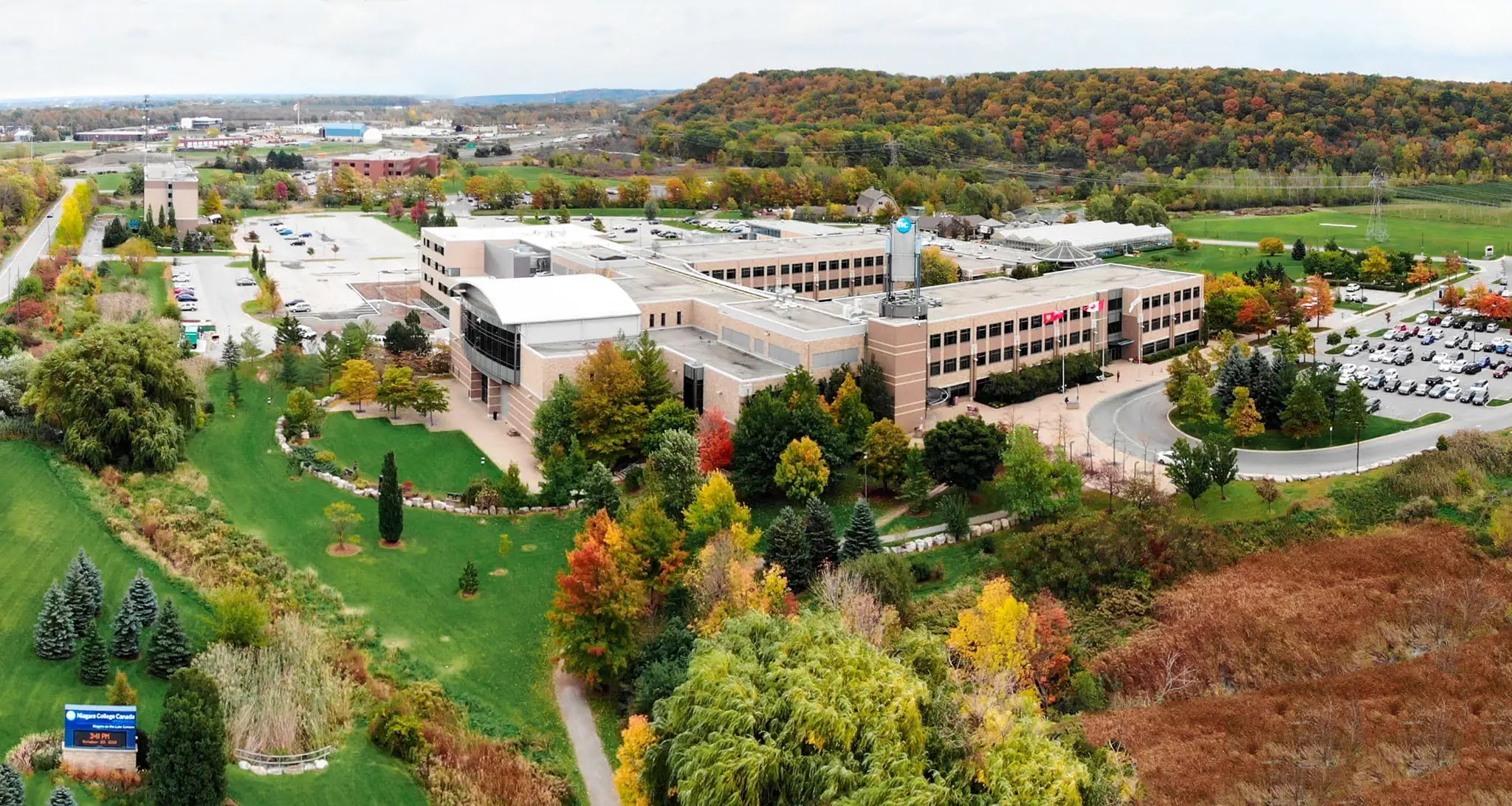
The 125-acre Daniel J. Patterson Campus in Niagara-on-the-Lake sits at the foot of the Niagara Escarpment. It is the main setting for business, culinary, hospitality, tourism, environmental, horticultural and beverage studies. The campus includes teaching enterprises, research facilities, a vineyard and ecological learning areas.
Both campuses provide access to the Niagara Region’s communities and attractions, including Niagara Falls, wineries, museums, galleries and festivals. Regional transit serves municipalities across Niagara, and GO Transit provides service to the Niagara-on-the-Lake campus. The region also offers outdoor recreation around the Niagara River, Lake Erie and Lake Ontario.
Academic Areas and Credentials
Niagara College’s programs span several academic and career areas. Certificate and diploma programs provide routes into applied fields, while graduate certificates offer further study for applicants with eligible postsecondary education. The college also offers honours bachelor’s degrees, including business administration degrees and joint game design and game programming degrees with Brock University.
Health, Community Services and Justice
Health-related studies include allied health, practical nursing and personal support work. Students can pursue fields such as dental care, paramedicine, pharmacy, massage therapy and rehabilitation support. Some nursing graduate programs are intended for qualified internationally trained nurses.
Community services programs focus on supporting children, youth, adults and older people in areas such as early childhood education, social services and recreation therapy. Justice and fitness studies cover areas including policing, security, corrections, exercise and health promotion. Many programs in these fields include placements or other applied learning experiences.
Business, Hospitality and Culinary Studies
Business and management studies include accounting, marketing, human resources, international business and supply chain management. Students can also study office administration and sport management. Depending on the program, opportunities may include co-op, internships, placements or pathways to industry certification.
At Niagara-on-the-Lake, hospitality and tourism studies draw on the surrounding tourism sector and the college’s teaching enterprises. Culinary programs encompass baking, food preparation, culinary management and food technology. Wine, beer and spirits studies combine production and business-related learning with access to on-campus facilities.
Technology, Trades, Media and the Environment
Technology studies include engineering technology, automation and renewable energy. Skilled trades offerings include certificate and diploma programs alongside apprenticeship training in areas such as electrical work, carpentry, machining, automotive service and welding.
Media studies encompass creative and technical fields, including broadcasting, acting, graphic design, photography, computer programming and game development. Environmental and horticultural studies include greenhouse and landscape work, ecosystem restoration and environmental assessment.
Academic Preparation and English Studies
Academic and Liberal Studies programs help students explore career directions, build academic skills and prepare for further postsecondary education. Options include general arts and science and preparatory studies for health or community services. Some programs have online delivery options.
The School of English Language Studies offers non-credit English as a second language programs for domestic and international students. These programs support language development for academic, social and professional settings and may include experiential activities and excursions. The college also offers employment-focused English training for newcomers to Canada.
Applied Learning and Campus Facilities
Practical learning is a central feature of the college’s approach. Depending on their program, students may participate in co-op work terms, internships, field placements, clinical placements, practicums or applied research. Not every program includes the same type of work-integrated learning.
At Welland, health students can learn in facilities that include a dental clinic, simulated community pharmacy and sterile product room. Justice and fitness students have access to simulation spaces, including crime scene labs, as well as athletic facilities. Technology and trades students use labs and equipment for technical and hands-on training. The campus also has a teaching hair salon and massage therapy clinic.
At Niagara-on-the-Lake, teaching enterprises include a winery, brewery, distillery, greenhouse and spa. The campus has a 40-acre vineyard, a hop yard and an apiary. Culinary students may prepare food for retail, restaurant service, pop-up dining, banquets and catering. Environmental and horticultural learning spaces include a landscape workshop, design facilities and student-restored wetlands.
Research and innovation facilities at both campuses provide another setting for applied work. Students in some fields can also connect with industry through projects, events, networking and volunteer opportunities.
Admission and Pathways
Admission requirements vary by credential and program. Many certificate and diploma programs require an Ontario Secondary School Diploma or equivalent and Grade 12 English. Depending on the field, applicants may also need mathematics, biology, chemistry, physics or other specific courses.
Honours bachelor’s degree applicants generally need an Ontario Secondary School Diploma or equivalent, appropriate Grade 12 university or mixed-level courses, and program-specific prerequisites and minimum averages. Graduate certificate applicants generally need an eligible college diploma or bachelor’s degree and proof of English proficiency. Some graduate programs require prior study or experience in a related field.
Additional requirements may include an audition, portfolio, statement of interest, test or other assessment. Some programs also have age, employment, certification or health requirements. For certain clinical and field placements, students must meet medical criteria. Meeting minimum requirements does not guarantee admission: competitive programs may rank eligible applicants using required course grades and other assessments.
Applicants aged 19 or older who do not have a secondary school diploma or equivalent may be considered as mature students, but must still meet their program’s specific requirements. Academic upgrading, including the Academic and Career Entrance program, can help students prepare for postsecondary admission or obtain required skills and courses.
For English language proficiency, accepted pathways described in the brochure include recognized tests such as IELTS, TOEFL and CAEL, as well as qualifying results in the college’s English for Academic Preparation program. Requirements vary by credential and program, and some programs have distinct standards. International applicants provide academic transcripts and proof of English proficiency where applicable.
Students with previous postsecondary education may be assessed for transfer credit. The college also offers prior learning assessment and recognition for applicants who can demonstrate relevant college-level learning acquired through experience or other forms of study. Graduates may explore further education pathways in Canada and abroad.
Student Support and Financial Aid
Niagara College identifies academic advising, career services, counselling and mental health services, health services, accessibility services and peer services among its student supports. Academic and Liberal Studies students can also access educational support and career planning assistance.
English language students receive support from an ESL advisor and international student advisors. The International Housing and Settlement team assists students transitioning to Canada with residence, off-campus housing and homestay options.
Scholarships and bursaries are available, including opportunities for international students. Eligible domestic students may also apply for assistance through the Ontario Student Assistance Program. Award and financial aid eligibility requirements vary.
Housing, Dining and Campus Life
Both campuses have furnished, air-conditioned, smoke-free residences. Suites have two private bedrooms, a kitchen area with a refrigerator and microwave, and a bathroom. Residence advisors help students adjust to their accommodations, and residence life includes social programming and student leadership opportunities.
Students can also explore off-campus accommodation through housing listings. The college’s homestay option is among the housing services described for international students.
Campus cafeterias, coffee and snack outlets, and meal plans provide dining options. Student centres at Welland and Niagara-on-the-Lake offer casual dining and activities presented by the Student Administrative Council. Students can also take part in clubs, campus activities and community opportunities alongside their studies.