Campuses and Communities
Northern College serves communities across a region known for its forests, lakes and outdoor recreation. Each campus has a distinct mix of programs and facilities:
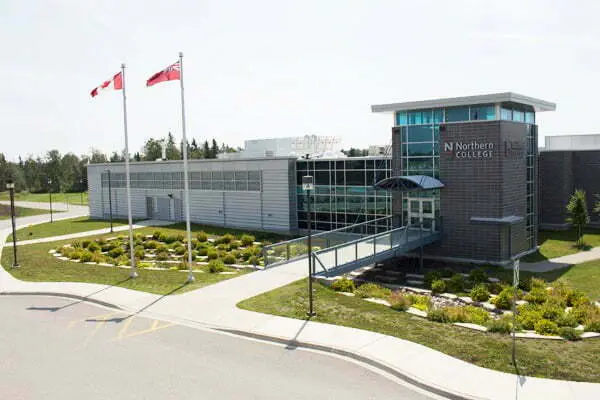
- Timmins: The campus offers studies in areas including emergency services, health sciences, engineering technology, trades, business and community services. It is home to the Integrated Emergency Services Complex and the Centre of Excellence for Trades Technology.
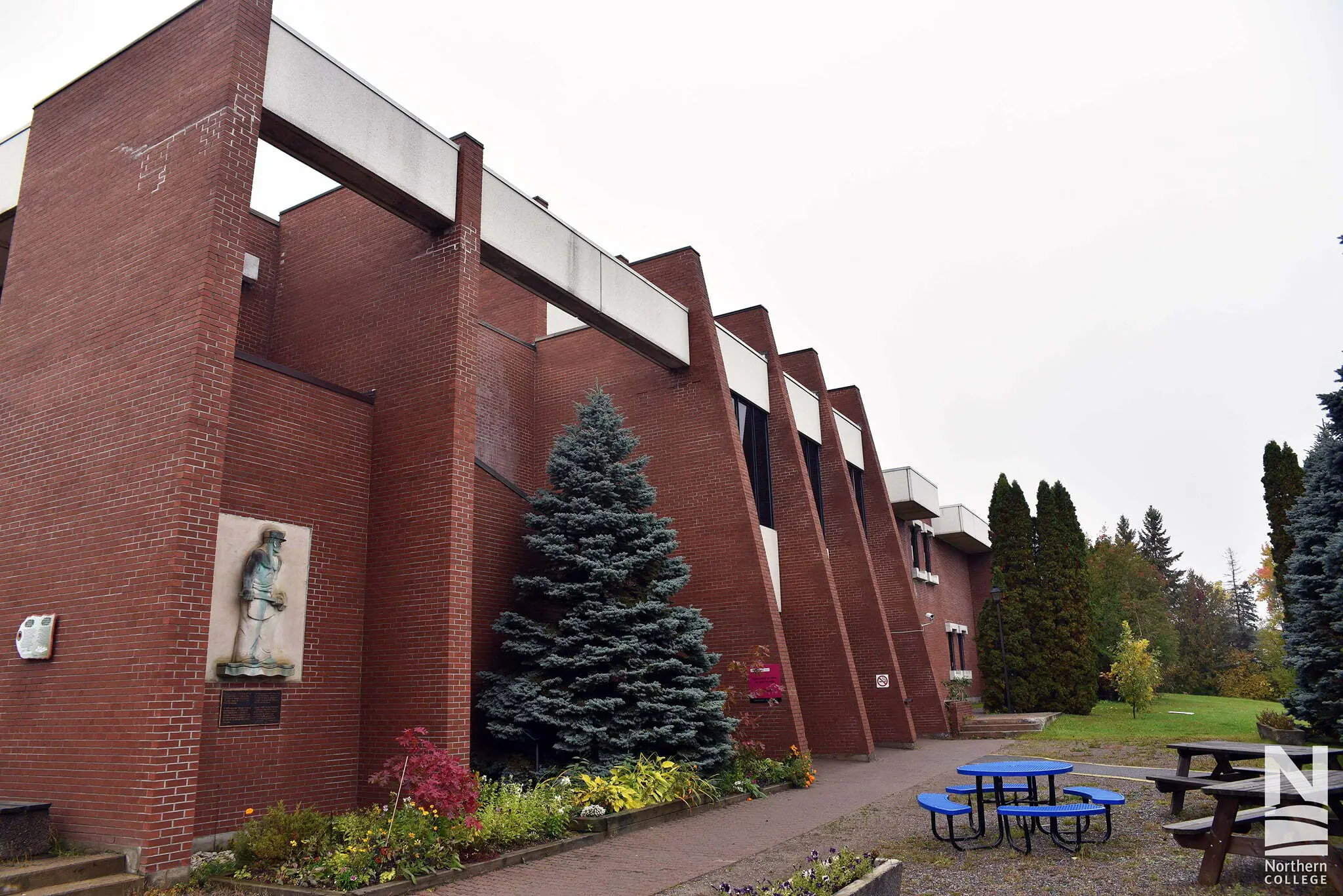
- Haileybury: Located in Temiskaming Shores near Lake Temiskaming, the campus houses the Veterinary Sciences Centre and the Haileybury School of Mines. It also offers studies in health, community services, business and technology.
- Kirkland Lake: Northern’s first campus is home to its welding education and applied research facilities. Other areas of study include environmental technology, nursing, early childhood education and business.
- Moosonee: The campus serves the James Bay region and offers programs in areas including trades, technology, pre-health, early childhood education, paramedicine, business and office administration. Moosonee is not connected to Ontario’s road system; travellers arrive by train or plane.
Access Centres in communities across Northeastern Ontario, together with distance education options, help learners study closer to home. Northern College acknowledges that it stands on the traditional and territorial lands of the Cree, Oji-Cree, Ojibway and Algonquin peoples.
Academic Areas and Credentials
Northern’s academic offerings range from introductory certificates to advanced diplomas and graduate certificates. Some programs are structured so that students can build on an earlier credential, while university partnerships provide additional routes to degree study.
Health and Emergency Services
Health sciences encompasses nursing, personal support, medical laboratory work and health care management. Northern offers a Bachelor of Science in Nursing in partnership with Laurentian University, alongside college-level health credentials. Simulated patient scenarios and practice labs allow students to develop skills before entering placements or preceptorships offered in many health programs.
Emergency services studies cover policing, paramedicine, firefighting and emergency management. Training includes simulations and, in some programs, opportunities to learn alongside students from other emergency services disciplines.
Veterinary Sciences
At Haileybury, veterinary studies include animal care, veterinary assisting and technology, grooming, wildlife rehabilitation and companion animal rehabilitation. The college describes these options as layered, allowing students to build on earlier training and pursue additional credentials. Students gain practical experience with animals through the campus Veterinary Sciences Centre.
Technology, Mining and Trades
Technology programs cover areas such as civil, construction, computer, electrical, instrumentation, environmental and mechanical engineering technology. The Haileybury School of Mines provides education in mineral exploration and mining engineering. Trades and motive power studies include industrial millwright work, automotive service, heavy equipment and welding.
Some technology and trades pathways allow students to progress from a certificate to a diploma, or from a technician diploma to an advanced diploma. Northern is also an authorized training body for the International Institute of Welding.
Business and Community Services
Business and office administration studies include accounting, marketing, human resources, entrepreneurship, agriculture and legal office work. A business fundamentals certificate provides a foundation for further study in Northern’s business diploma programs.
Community services offerings address social services, addiction and mental health, early childhood education, and child and adolescent mental health. Depending on the program, students may learn through collaborative labs, case studies and field placements.
Practical Learning and Specialized Facilities
Northern emphasizes applied learning through classrooms, laboratories, shops and real-world scenarios. Instructors with industry experience teach across practical disciplines, and the college works with employers to connect education with workplace needs.
The Integrated Emergency Services Complex in Timmins brings emergency services training together with working first-response organizations. Its facilities include vehicle bays, a fire tower, a burn building, a mock apartment, a courtroom and a virtual disaster simulator. Students can practise responses to simulated emergencies and take part in cross-disciplinary activities.
At Haileybury, the Veterinary Sciences Centre includes a surgery suite, examination and therapy rooms, kennels, a grooming salon and an underwater treadmill. Students and staff work with animals from local shelters and other facilities. In Timmins, the trades shop supports hands-on learning with tools and equipment used in millwright, automotive and heavy equipment work.
The Materials Joining Innovation Centre at Kirkland Lake gives welding students access to equipment and industry projects. Applied research and entrepreneurship facilities are also located at the Timmins campus.
Work Experience and Flexible Study
Work-integrated learning varies by program. Students in selected health, emergency services, business, community services and technical programs may complete field placements, clinical experiences or other workplace-based training. Co-op options are available in certain programs, including areas of environmental technology, business agriculture and welding. Students considering co-op are encouraged to connect with employers when arranging a placement.
Some programs combine on-site and distance learning, while others are delivered online. Northern’s online learning platform provides access to course materials and opportunities to connect with instructors and classmates. Recorded learning activities allow remote students to review material, and remote learners can access student supports.
The Northern Training Division works with communities and industry to provide customized training, including first aid, mining training and trades pre-apprenticeships. Training may be offered on campus, in communities or in workplaces.
Admission and Further Study Pathways
Admission requirements depend on the program and credential. Many certificate and diploma programs require Grade 12 English and, in some fields, mathematics. Health and veterinary programs may also require biology and chemistry, while engineering technology programs commonly require Grade 12 mathematics and may recommend physics. Some programs set minimum grades in prerequisite subjects.
Mature applicants may be considered for certain programs following testing. Graduate certificates generally require a relevant post-secondary credential or, for some programs, related work experience. Applicants to college certificate and diploma programs use the Ontario Colleges Application System.
Students who need to develop academic skills or obtain prerequisites can explore Academic Upgrading, the Academic and Career Entrance certificate, pre-health studies or general arts and sciences. The Academic and Career Entrance certificate is recognized as equivalent to the Ontario Secondary School Diploma by Ontario community colleges.
Northern also assesses eligible prior coursework for transfer credit. Through an agreement with Algoma University, graduates of eligible college programs may receive advanced standing toward university degrees, subject to the applicable requirements. The partners also offer a computer science pathway leading to both a college credential and a university degree.
Student Support and Financial Assistance
Student advisors can help with learning accommodations and academic support, including tutoring. Accessibility Services works with students studying on campus or online to identify accommodations related to functional limitations. Documentation from a registered health care professional is required to access support services, although interim accommodations are available.
Indigenous advisors are available at all four campuses. The Elders on Campus program offers opportunities for mentoring, intergenerational connection and spiritual well-being, while events and activities celebrate Indigenous teachings and traditions.
Financial aid advisors help students explore ways to finance their education. Northern also offers scholarships, bursaries and awards for different groups of students; eligibility is not limited to academic achievement. Staff can also assist students seeking housing and employment.
Housing and Student Life
Residence options are described for Timmins and Haileybury. The Timmins residence has rooms with private bathrooms, as well as shared kitchen, laundry, lounge and games-room facilities. Some rooms have layouts designed for accessibility. A meal plan is not required.
The privately owned and operated Haileybury residence is close to the main college building. Its furnished townhouse-style apartments have individual bedrooms and shared kitchens, living areas, bathrooms and laundry facilities.
The student-driven Northern College Student Association organizes services, events and activities across the four campuses. Students can vote for its executive board or seek a leadership position. Beyond campus, the surrounding communities offer recreation ranging from walking and cycling to fishing, camping and winter sports.