Campus Location and Community
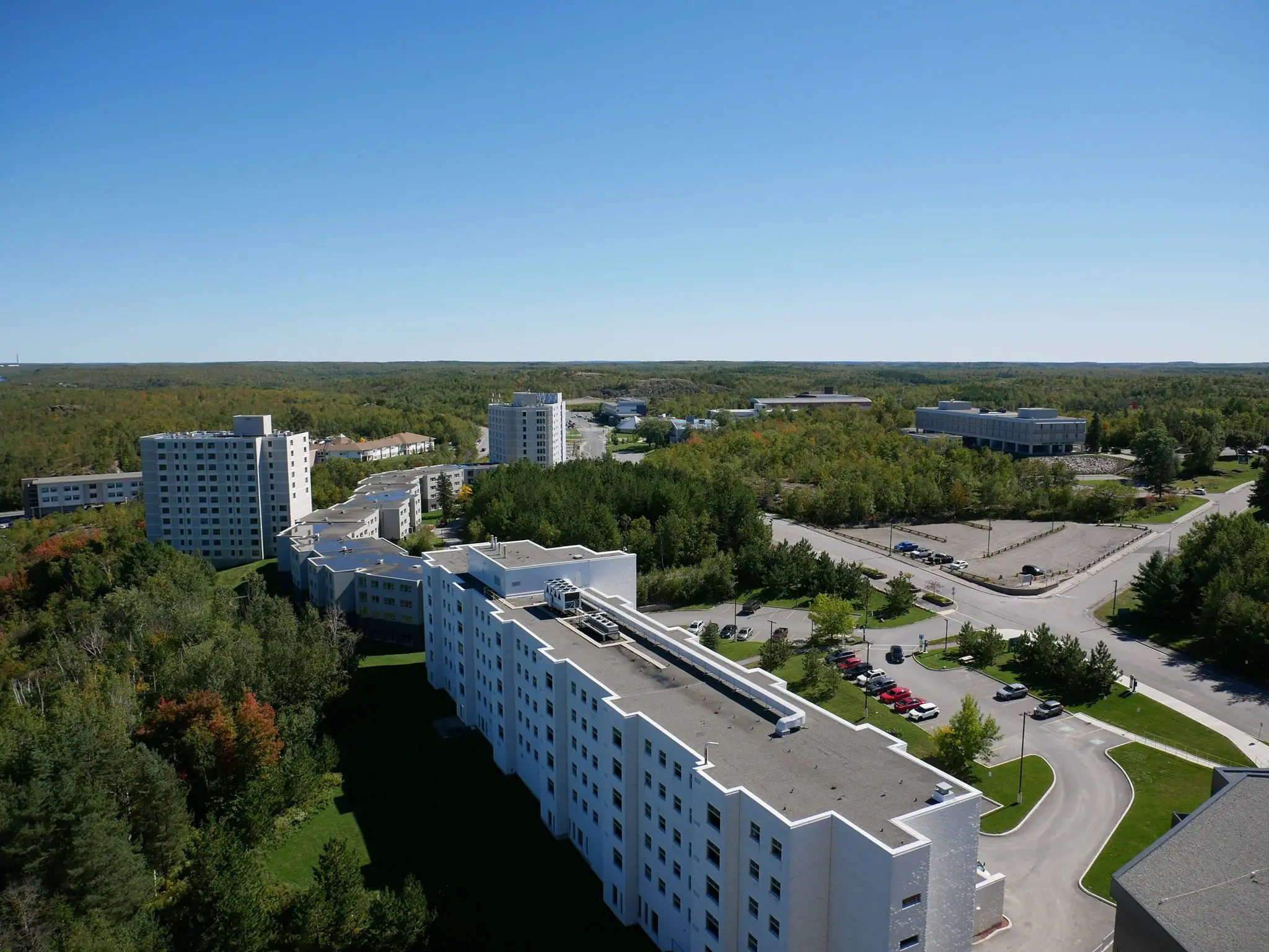
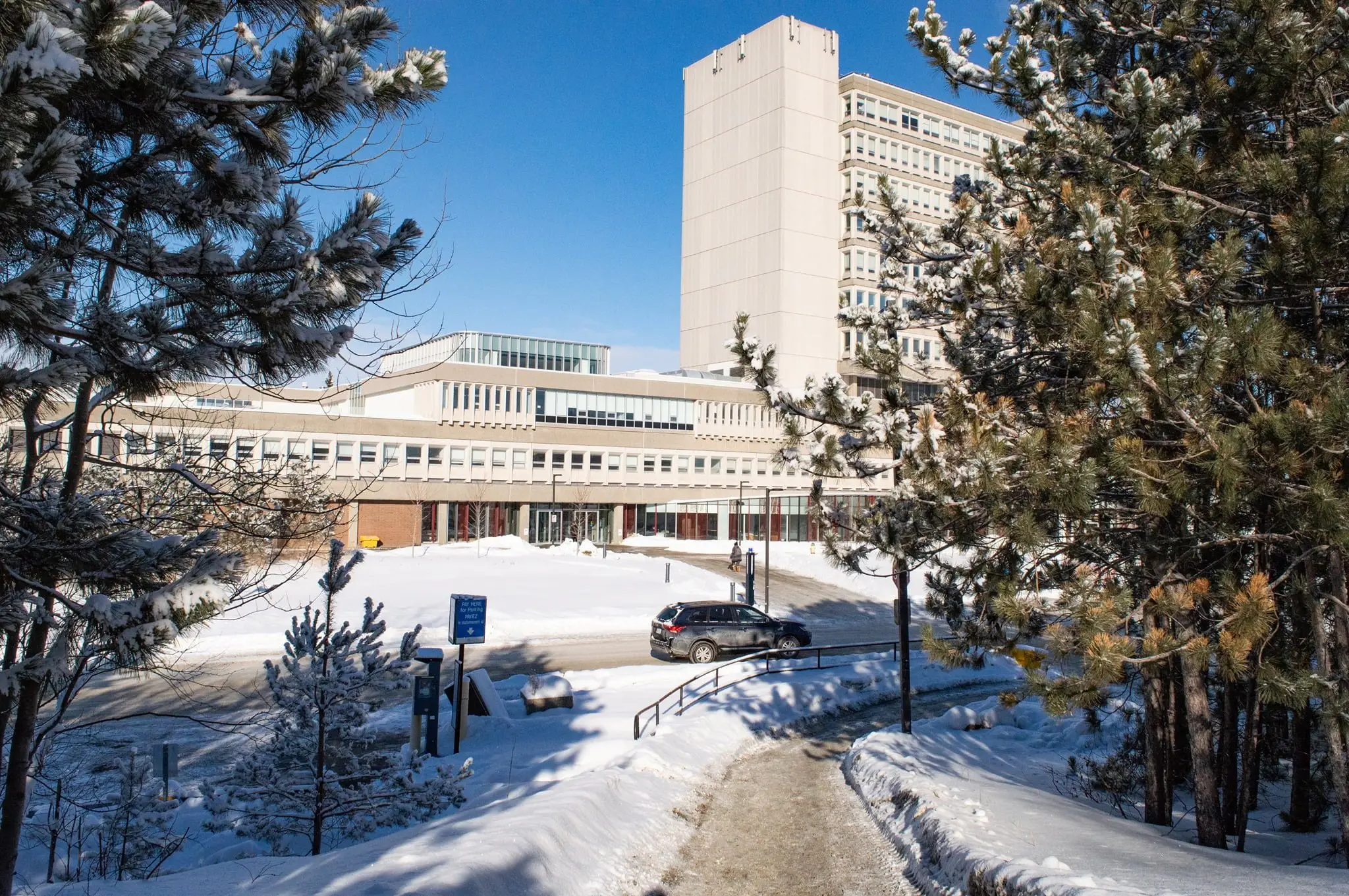
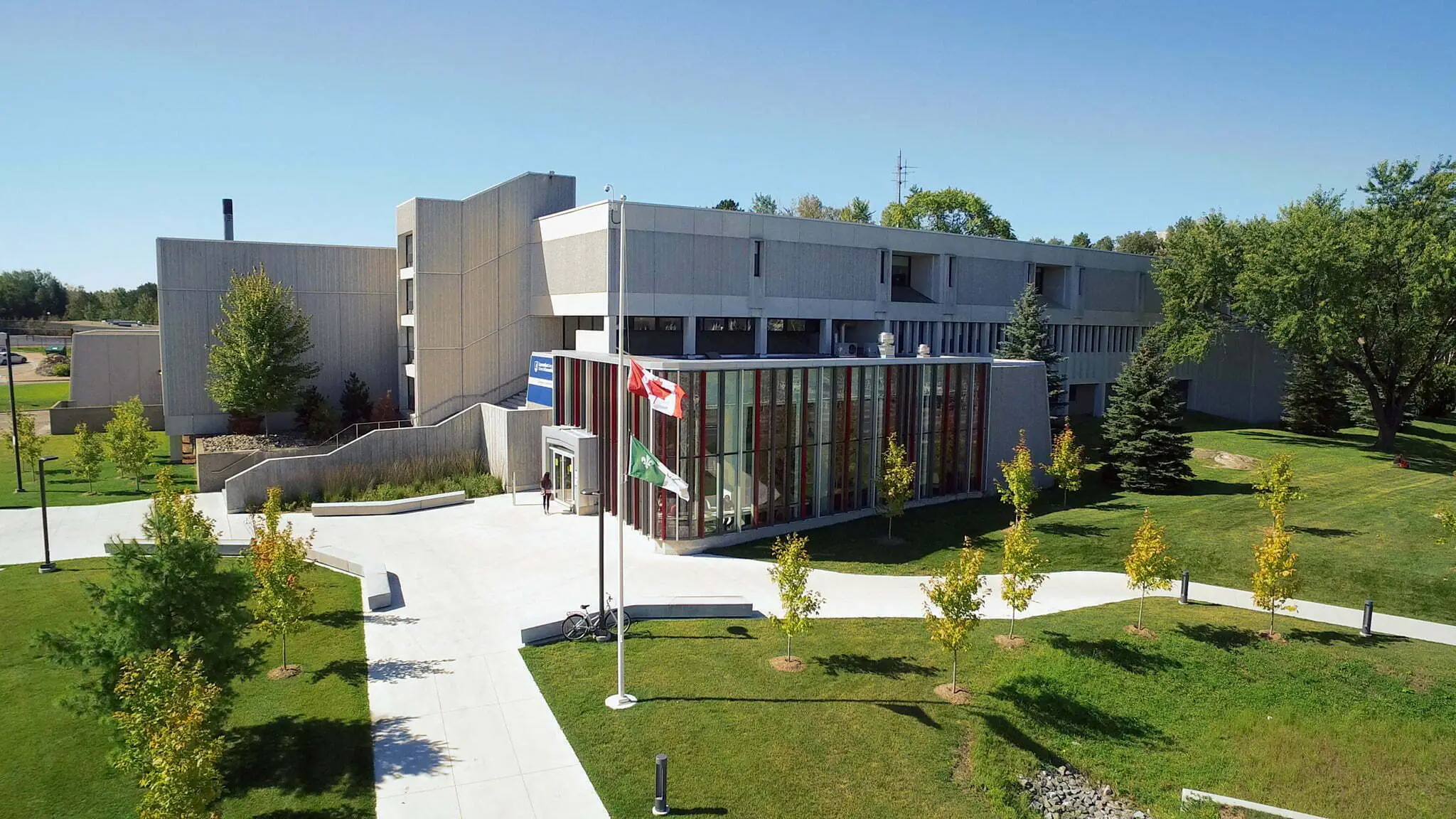
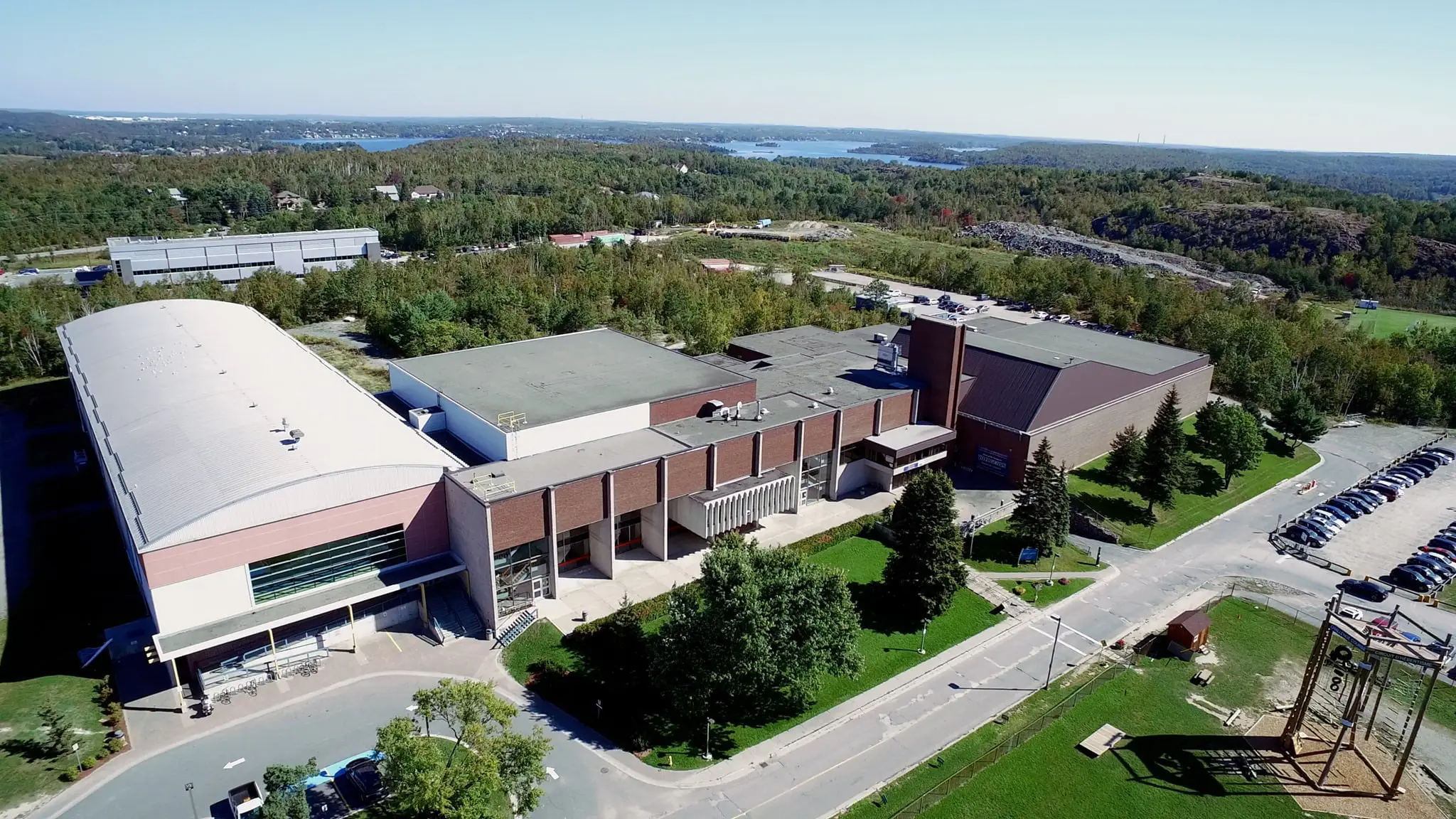
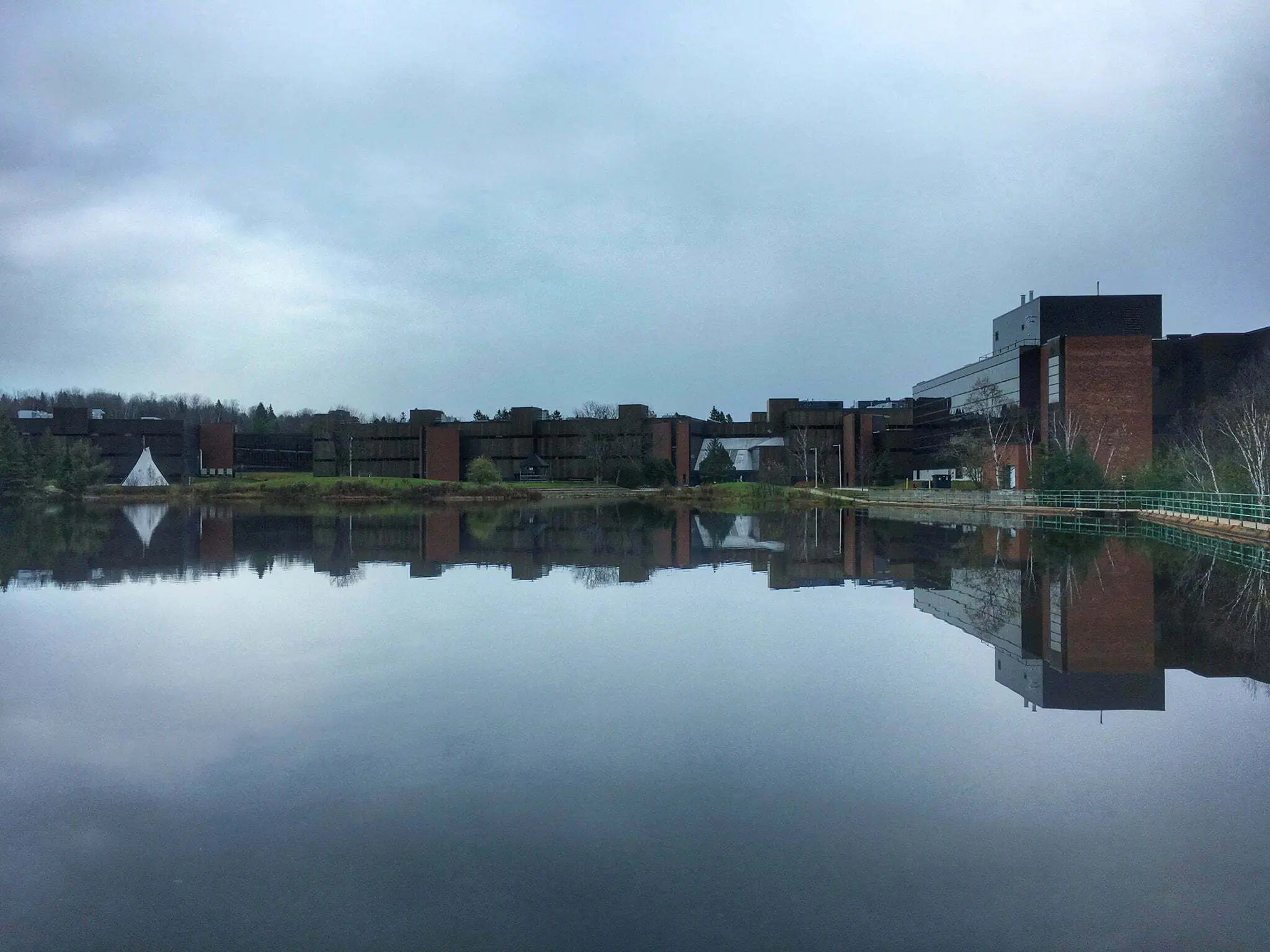
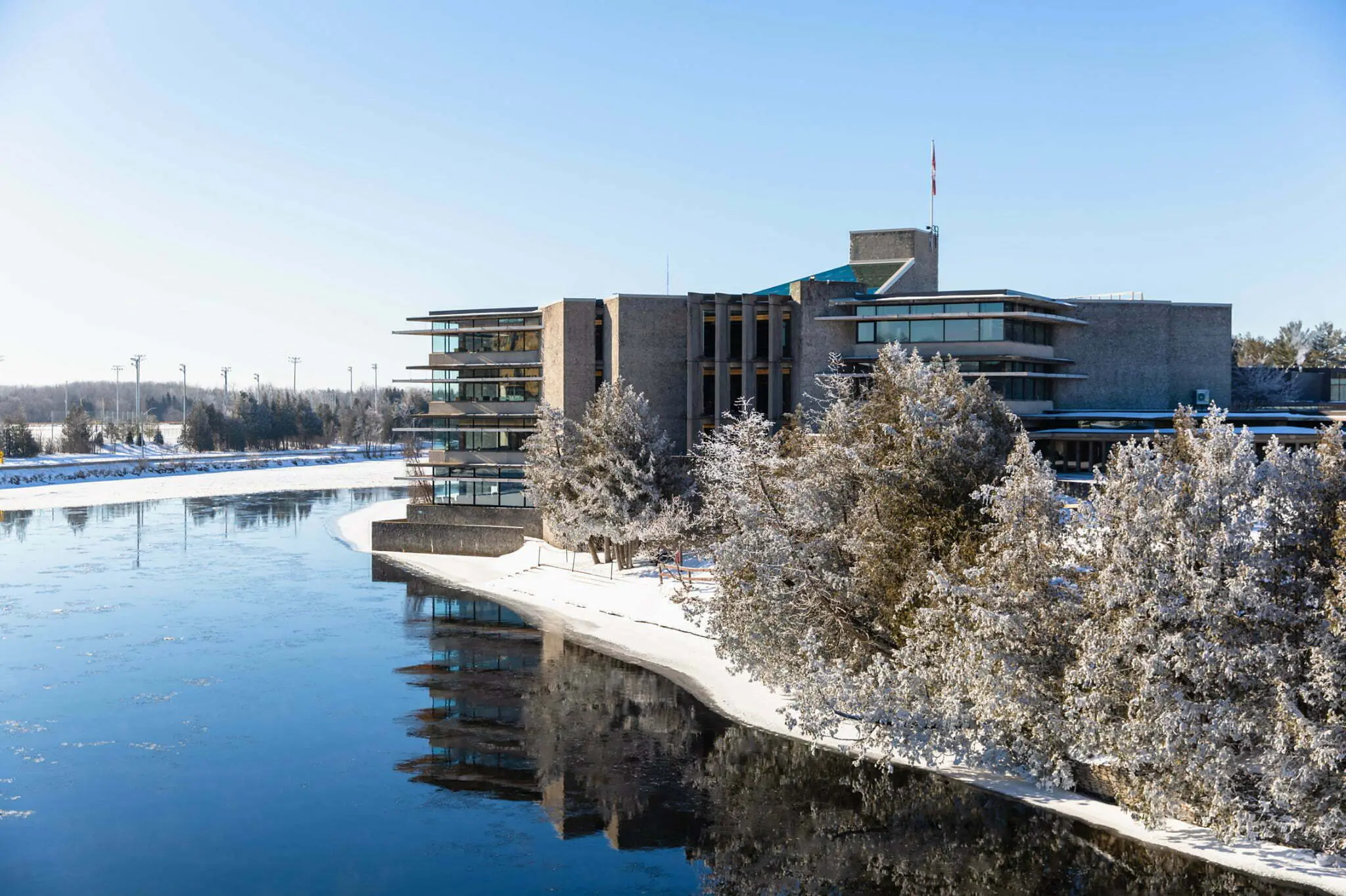
Laurentian’s main campus is minutes from downtown Sudbury and covers close to 700 acres adjoining the Lake Laurentian Conservation Area. Five freshwater lakes border the campus, and students have access to trails, outdoor recreation spaces and a private beach. The university is located within the territory of the Robinson-Huron Treaty of 1850, on the traditional lands of the Atikameksheng Anishnawbek and near the Wahnapitae First Nation.
Greater Sudbury is a Northern Ontario centre for health, education, business, government, mining, arts and entertainment. The city combines urban services with access to lakes, forests, trails and provincial parks.
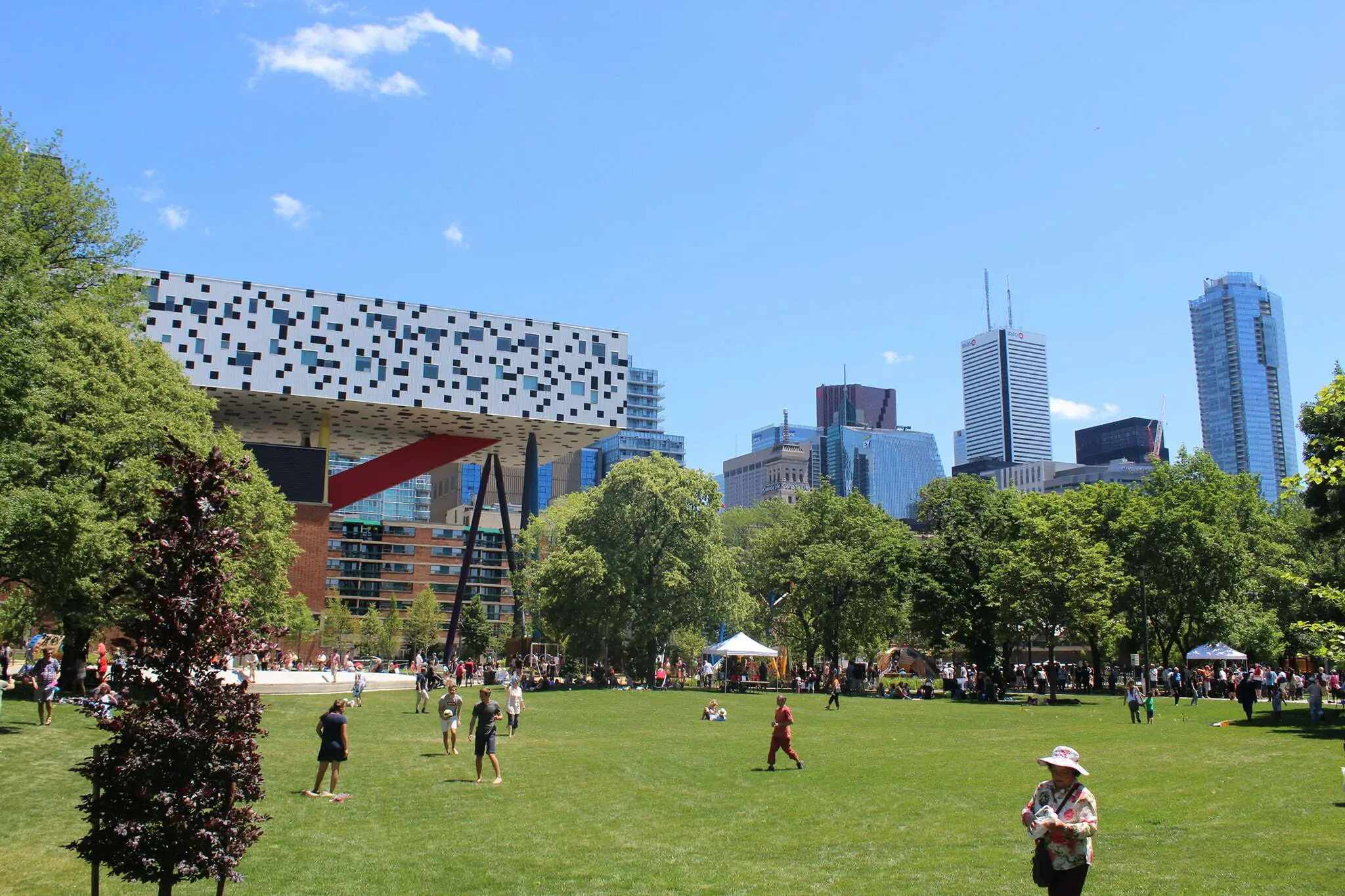
Teaching and research facilities include classrooms and laboratories, study spaces, research centres, engineering workshops and architecture studios. The architecture school is located separately in downtown Sudbury. The library provides research assistance, workshops and access to a collection of academic resources.
Faculties and Academic Areas
Laurentian organizes its undergraduate offerings across four faculties. Students can pursue bachelor’s degrees, while the university also offers certificates, a postgraduate diploma, master’s degrees and doctoral degrees in selected fields.
Arts
The Faculty of Arts covers humanities and social sciences, including literature and writing, history, economics, psychology, sociology, criminology, law and justice, and interdisciplinary studies. Some subjects are available in English, French or both. Arts degrees include requirements in linguistic awareness, Indigenous content and scientific literacy.
Education and Health
The Faculty of Education and Health brings together teacher education and fields concerned with health, movement and community services. Areas of study include nursing, kinesiology, health promotion, social work, Indigenous social work, outdoor adventure leadership and sport psychology.
Concurrent education pathways allow students to combine teacher preparation with another undergraduate discipline. French-language consecutive education pathways are also available to applicants who already hold a bachelor’s degree. Education students gain practical experience through school placements.
Management
The Faculty of Management offers business administration and sports administration studies. Business students can explore areas such as accounting, finance, marketing, human resources, entrepreneurship and international management. Depending on their program, students may apply their learning through internships, case studies and projects with organizations.
Science, Engineering and Architecture
The Faculty of Science, Engineering and Architecture includes biological and chemical sciences, earth sciences, computer science, forensic science, engineering and architectural studies. Laboratory work, field experience and undergraduate research are features of study across these areas.
Architecture students examine design, culture, technology and professional practice, with attention to Northern Ontario and the use of wood and other sustainable materials. The school also incorporates Indigenous perspectives and community design projects. Engineering study includes chemical, mechanical and mining fields.
Flexible Study and Graduate Education
Laurentian offers three- and four-year bachelor’s degree options in selected subjects. Depending on their program requirements, students can use electives to combine areas of interest through majors, minors, concentrations or specializations. For example, an undergraduate student may pair a primary field with a complementary minor.
Selected programs are available online, including some options designed for part-time study. Availability varies by subject and degree pathway. The university also offers graduate study in fields such as health, management, science, engineering, architecture, Indigenous relations and social work. Graduate credentials include master’s and doctoral degrees, as well as a postgraduate diploma.
Bilingual and Indigenous Learning
Laurentian offers learning opportunities in both English and French, although not every program is available in both languages. Francophone and francophile students can also take part in activities organized by the university’s French-language student association.
Students may complement their degree with a Certificate of Bilingualism by completing qualifying coursework in their second language of study. The university also offers an Anishnaabemowin land-based immersion certificate.
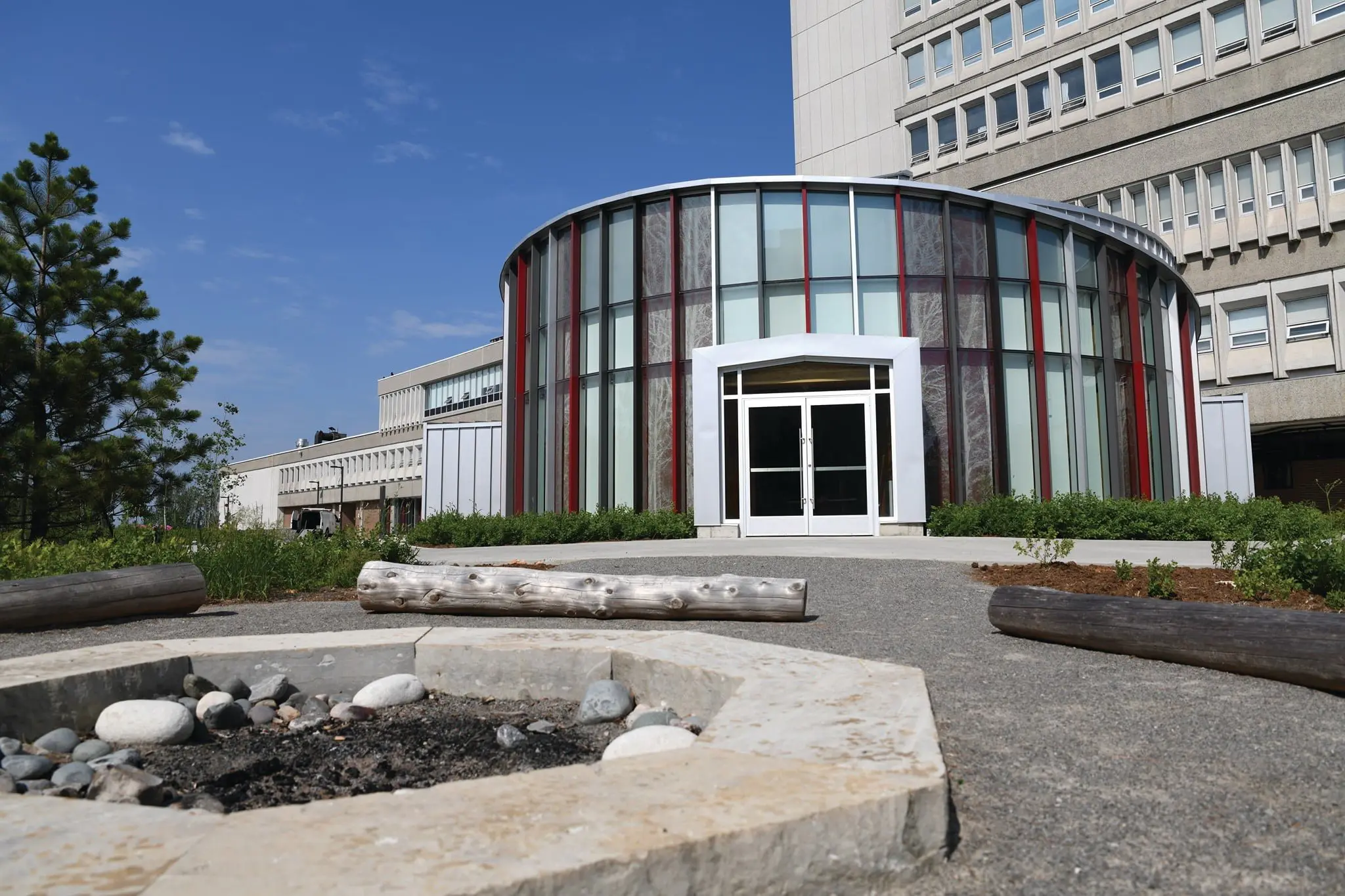
Indigenous Student Affairs and the Indigenous Students Circle organize opportunities that can include ceremonies, language learning, storytelling, cultural teachings, workshops and student events. The Indigenous Sharing and Learning Centre is among the resources available on campus. Indigenous perspectives also form part of academic study in areas such as social work, education and architecture.
Experiential Learning and Career Preparation
Laurentian provides several ways for students to connect academic study with practical experience. Opportunities vary by program and can include paid co-operative education, internships, field placements, professional practicums, research projects, case studies and community volunteering.
Co-op options are available in selected areas, including architecture, computer science, engineering and sciences. Engineering co-op placements are competitive and are not guaranteed. Internships connect students with employers for placements of varying lengths, while some professional programs require supervised practicums or placements as part of their preparation for certification or licensure.
Undergraduate research opportunities are available in a range of disciplines. Students may also use specialized learning spaces, including science laboratories, engineering workshops and architecture studios. The university’s innovation and entrepreneurship facilities provide collaborative space, meeting rooms and a makerspace with equipment for design and product development.
Career and Employment Services provides job and career postings, and students may find work opportunities on campus. Student clubs, associations and peer-support roles offer additional ways to develop experience alongside academic study.
Residence and Dining
Laurentian offers on-campus residences with options for first-year students. Single Student Residence has apartment-style accommodation, with shared living, kitchen, bathroom and storage facilities. University College offers single and double rooms in a dormitory-style building, with kitchens and bathrooms on each floor. Huntington Residence, located on campus, is independently operated and also accepts first-year students.
Residence living places students close to classes, study areas, recreation facilities and campus services. The brochure describes residence activities and access to staff around the clock.
Campus dining includes a dining hall, cafés and other food outlets. Vegetarian, vegan and halal choices are among the options described. Meal plans are required for students living in the residences identified in the brochure, and optional plans are available for non-residents.
Student Services and Campus Life
The Student Success Centre offers orientation, transition and advising support, counselling and accessibility services, learning assistance and peer-support programs. Health and wellness services include registered nurses and nurse practitioners, with access to a primary care physician by appointment. The university also lists international student services, childcare, a multi-faith prayer space, an equity and human rights office, and resources for LGBTQ2S+ students.
Campus security operates year-round and offers a Safe Walk program. The Student Centre includes study and lounge areas, private study rooms, a games room and space for clubs. Student associations, clubs and residences organize activities throughout campus life.
Recreation facilities include gyms, training space, indoor and outdoor tracks, climbing facilities and multi-use trails. Students can also participate in or follow Laurentian Voyageurs varsity sports, including basketball, cross-country, curling, golf, soccer, Nordic skiing and track and field.
General Admission Pathways
Ontario secondary school applicants generally need an Ontario Secondary School Diploma and at least six Grade 12 university or university/college preparation courses. Required subjects and minimum averages vary by program. Science, engineering and health pathways may require particular mathematics or science courses, while architecture applicants must also submit a portfolio and statement of interest. Indigenous social work requires a statement of interest.
Laurentian accepts secondary school qualifications from other Canadian provinces and territories according to their respective academic course requirements. Applicants from Quebec may be considered with at least one full year of academic CÉGEP study; additional study may be eligible for transfer credit. Advanced Placement and International Baccalaureate coursework may also be considered for transfer credit when the university’s conditions are met.
Language proficiency
Applicants to English-language programs must meet Laurentian’s English proficiency requirements. Accepted pathways include approved academic English preparation programs and recognized language tests. For example, the brochure lists an IELTS Academic score of 6.5 overall, with no band below 6.0, or a TOEFL iBT score of 88 overall. Academically admissible applicants who have not met the language requirement may receive a conditional offer based on completing an approved English for Academic Preparation program.
For French-language or bilingual programs, applicants can demonstrate proficiency through qualifying French-language study or an accepted French assessment. The brochure identifies three years of full-time study in French as one pathway and advanced-level results on specified French tests as another.
Scholarships and Financial Support
Laurentian describes entrance scholarships, bursaries and awards for eligible students, including academic, francophone and athletic awards. Government student assistance and campus work-study opportunities may also help students finance their education. Eligibility and renewal conditions vary by award.