

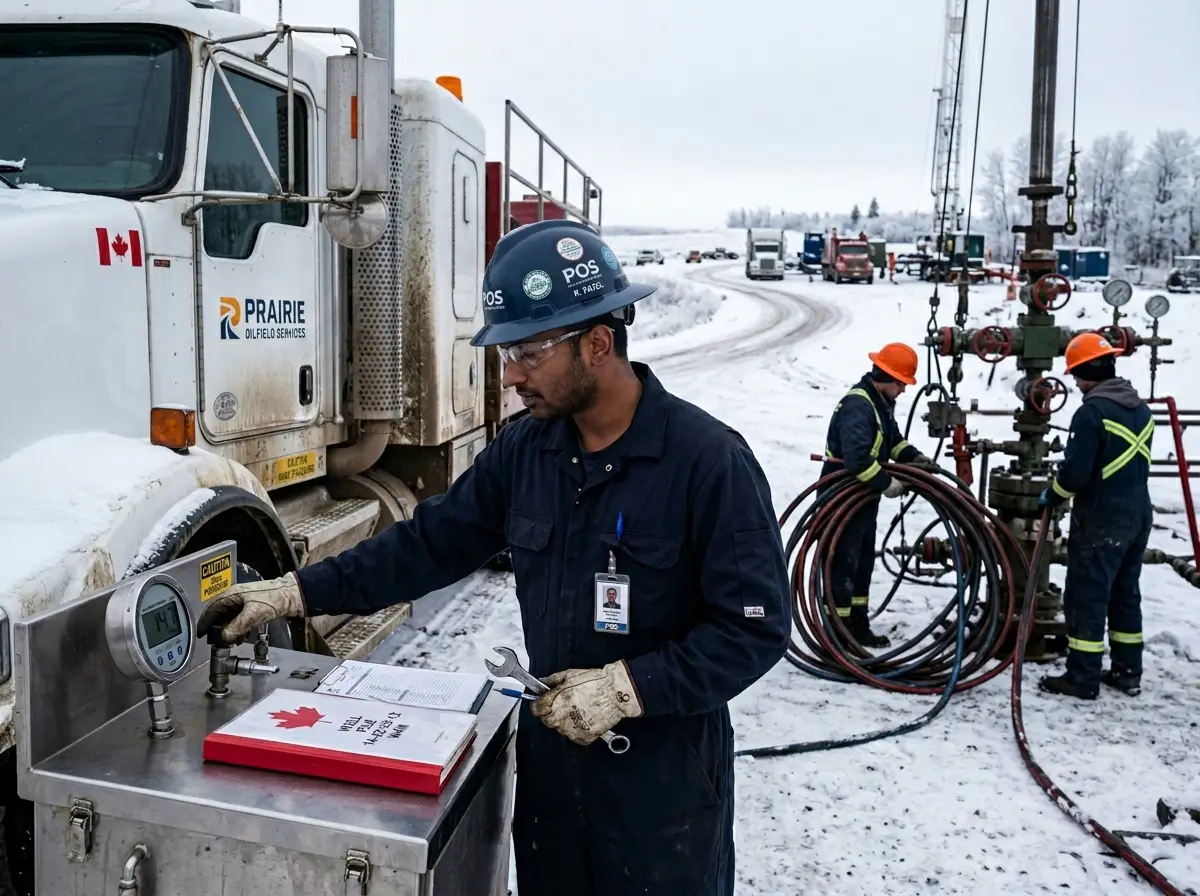
- This group performs some or all of the following duties:
- Oil and gas well drilling workers
- Use specialized equipment, information and maps to determine and document the location of buried pipelines and other utilities in preparation for seismic exploration and drilling activities
- Align and manipulate sections of pipe or drill stem from platform on rig derrick during removal and replacement of strings of pipe, or drill stem and drill bit
- Operate and maintain drilling mud systems and pumps during drilling, and mix mud, chemicals and additives
- Record mud flows and volumes and take samples
- Operate and maintain drilling rig diesel motors, transmissions and other mechanical equipment
- Assist in setting up, taking down and transporting drilling and service rigs
- Supervise floorhands and labourers.
- Oil and gas well services operators
- Drive well services truck to well site
- Assemble pumping equipment and attach pumps and hoses to wellhead
- Operate hydraulic pumping systems to pump chemicals, gases, sand, cement or other material into well
- Read gauges to monitor pressure, density, rate and concentration and adjust pumping procedure as required
- May mix chemicals and cements.
Employment Requirements
- Completion of secondary school is required.
- Training of up to three months with an experienced operator is required for oil and gas well services operators.
- Completion of petroleum industry-approved training courses may be required.
- One year of experience as a floorhand, assistant or labourer is usually required.
- Certificates in first aid, hydrogen sulphide awareness, blowout prevention, workplace hazardous materials information system (WHMIS), transportation of dangerous goods (TDG), cryogenic safety or in other safety concerns may be required.
- Rig technician certification for motorhands and derrickhands may be required by some employers.
- Oil and gas well services operators require a driver's license appropriate to the class of vehicle being driven.